Quick Answer: What Size Pool Pump Do I Need?
Pool pump sizing depends on your swimming pool’s water volume, required flow rate, plumbing resistance and filter capacity. Calculate the gallons per minute (GPM) needed for your intended turnover period, then choose a pump that delivers that flow at the system’s total dynamic head (TDH). For Florida homeowners, a properly sized Hayward variable-speed pump can provide efficient circulation while accommodating different operating speeds for filtration, spas and water features.
This guide explains how to calculate pool volume, determine the appropriate GPM and evaluate pump performance before purchasing equipment.
Start With Your Pool Volume
Every sizing method begins with gallons. For a rectangular pool, multiply length by width by average depth, all in feet, then multiply the cubic feet by 7.5. Average depth is the shallow depth plus the deep depth, divided by two.
For example, a 16-by-32-foot pool with a 3-foot shallow end and an 8-foot deep end has an average depth of 5.5 feet. Multiplying 16 × 32 × 5.5 × 7.5 gives an estimated pool volume of 21,120 gallons.
For other shapes:
-
Round pools: 3.14 × radius × radius × average depth × 7.5.
-
Kidney, freeform, or L-shaped pools: split the outline into rectangles and circles, calculate each, and add them together.
-
Pools with a sun shelf or tanning ledge: treat the shelf as its own shallow rectangle so you do not overstate the volume.
Measure the water surface, not the deck. If you have plans from the builder, the volume is often listed on them, which saves you the arithmetic.
Turn Volume Into the Flow Rate You Need
The formula is simple: required GPM = gallons ÷ (turnover hours × 60). Turnover is the time it takes your pump to move a volume of water equal to the whole pool through the filter once.
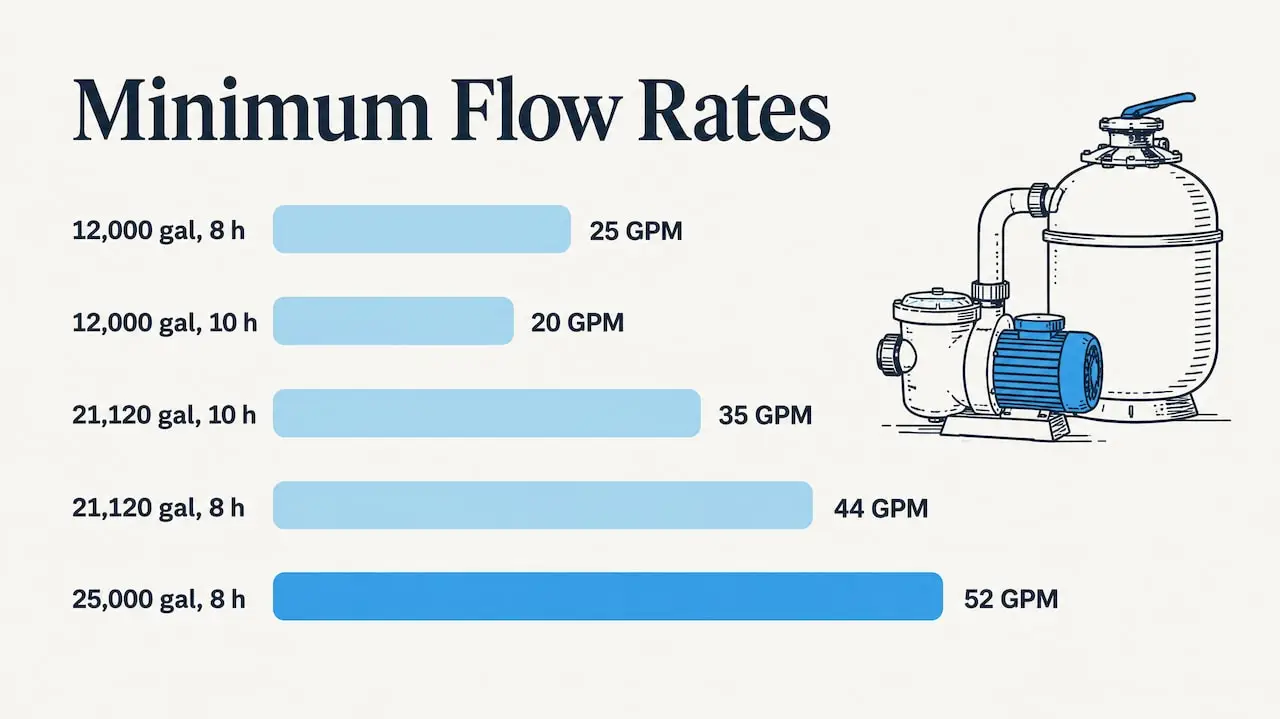
The Techno-Solis pump and filter sizing guide uses turnover periods of approximately 8 to 12 hours as sizing examples. These are calculation references rather than universal operating requirements for every residential pool. Actual circulation needs depend on pool usage, sanitation, equipment and applicable local requirements.
Here are worked examples using the formula:
| Pool | Volume | Turnover | Minimum flow |
|---|---|---|---|
| Small backyard pool | 12,000 gal | 8 hours | 25 GPM |
| Small backyard pool | 12,000 gal | 10 hours | 20 GPM |
| 16 × 32 ft, 3 to 8 ft deep | 21,120 gal | 10 hours | 35 GPM |
| 16 × 32 ft, 3 to 8 ft deep | 21,120 gal | 8 hours | 44 GPM |
| Large family pool | 25,000 gal | 8 hours | 52 GPM |
These examples illustrate the flow required to circulate a volume of water equal to the pool’s capacity within the selected turnover period. They are preliminary calculations, not final pump specifications. Plumbing resistance, filter capacity, suction safety requirements and applicable local regulations must also be considered before selecting equipment.
Why Flow Rate Matters More Than Horsepower
Horsepower describes motor output, but it does not determine how much water a pump will move through a particular pool’s plumbing. Pipe diameter, fittings, filters, heaters and total dynamic head (TDH) all affect actual performance. Hayward’s energy-efficient pool pump guidance explains how modern pump technology and performance ratings help homeowners compare equipment more effectively.
Energy efficiency matters as much as circulation capacity. ENERGY STAR’s pool pump guidance recommends comparing pumps using their Weighted Energy Factor (WEF) rather than relying on horsepower ratings alone.
To select the appropriate equipment, calculate the required GPM, determine the system’s TDH and review the manufacturer’s performance curves. The selected Hayward pump should deliver the necessary flow without exceeding the plumbing or filtration equipment’s operating limits.
Plumbing, Filters, and Equipment Set the Real Limit
Every pipe run, elbow, valve, filter, heater and chlorination system contributes to hydraulic resistance, measured as total dynamic head (TDH). As resistance increases, the pump delivers less water at a given speed. This is why pool pump sizing must account for the entire circulation system rather than horsepower alone.
Pipe diameter affects water velocity and the flow a plumbing system can accommodate. The following reference values illustrate how flow rates change with pipe diameter and water velocity:
| Pipe Size | 6 ft/sec | 8 ft/sec | 10 ft/sec |
|---|---|---|---|
| 1.5 inch | 38 GPM | 51 GPM | 63 GPM |
| 2 inch | 63 GPM | 84 GPM | 105 GPM |
For example, a pool requiring 44 GPM through a single 1.5-inch suction line would exceed the 6-feet-per-second reference shown above. Before choosing a larger pump, a pool professional should evaluate the plumbing layout, allowable water velocity, suction safety requirements and filter capacity. Increasing horsepower does not eliminate restrictions caused by undersized plumbing.
Pipe materials and layout also affect water movement. Although focused on drainage applications rather than pressurized pool circulation, this PVC versus corrugated pipe comparison illustrates how pipe construction and interior surfaces differ. Swimming pool circulation systems require plumbing materials and fittings rated for their specific operating conditions.
Check the Filter Before You Buy the Pump
A pool pump’s operating flow must remain within the filter manufacturer’s rated capacity. Excessive flow can reduce filtration performance and place unnecessary stress on the equipment. Check the filter label or owner’s manual for its maximum allowable flow rate before selecting a replacement pump.
Pool filtration systems also operate under pressure. Hayward’s filter installation and safety manual provides operating guidance, including precautions for handling pressurized equipment and adjusting filter valves. Always shut off the pump and follow the specific filter model’s pressure-release instructions before servicing the system. Pressure testing and equipment repairs should be performed by qualified professionals.
Features That Raise Head
Some features push a system into high-head territory, meaning a pump built for more resistance suits it better:
-
Heaters or heat pumps
-
Attached spas and spillover features
-
Solar heating
-
Automatic cleaners
-
Water features such as sheer descents, jets, and fountains
-
Long pipe runs and many valves or turns
A simple pool with a short plumbing run is a low-resistance system. Add a spa, a heater, and a water feature and the same pool behaves like a very different one. This is why we size the pump during design rather than after the pool is built.
Is 1 HP Enough, or Do You Need 1.5 HP?
The correct horsepower depends on pool volume, plumbing resistance, equipment and required flow. This 1 HP versus 1.5 HP pool pump comparison explains common differences between motor sizes, but horsepower alone cannot determine the right pump for every swimming pool.
For a replacement pump, begin with the required GPM and the system’s actual resistance rather than matching the old motor’s horsepower. Hayward variable-speed pumps allow circulation speeds to be adjusted for filtration, spas and water features, providing flexibility without relying on a single fixed speed.
What Happens When a Pump Is Too Big or Too Small
An oversized pool pump may consume unnecessary electricity and create excessive flow through plumbing or filtration equipment. An undersized pump may struggle to maintain adequate circulation, skimming or water feature performance.
Proper pool pump sizing balances required flow, hydraulic resistance and equipment limitations. The objective is reliable circulation without unnecessary energy consumption or equipment strain.
Sizing for Spas, Water Features, and Automation
A custom backyard often has more than one water function. A raised spa, a spillway, or a bubbler each draws flow, and a single pump has to serve them all or the design needs more than one pump. That is the main reason we plan equipment alongside the layout. If you are adding a hot tub or fountain, our spas and water features team plans the hydraulics with the rest of the pool.
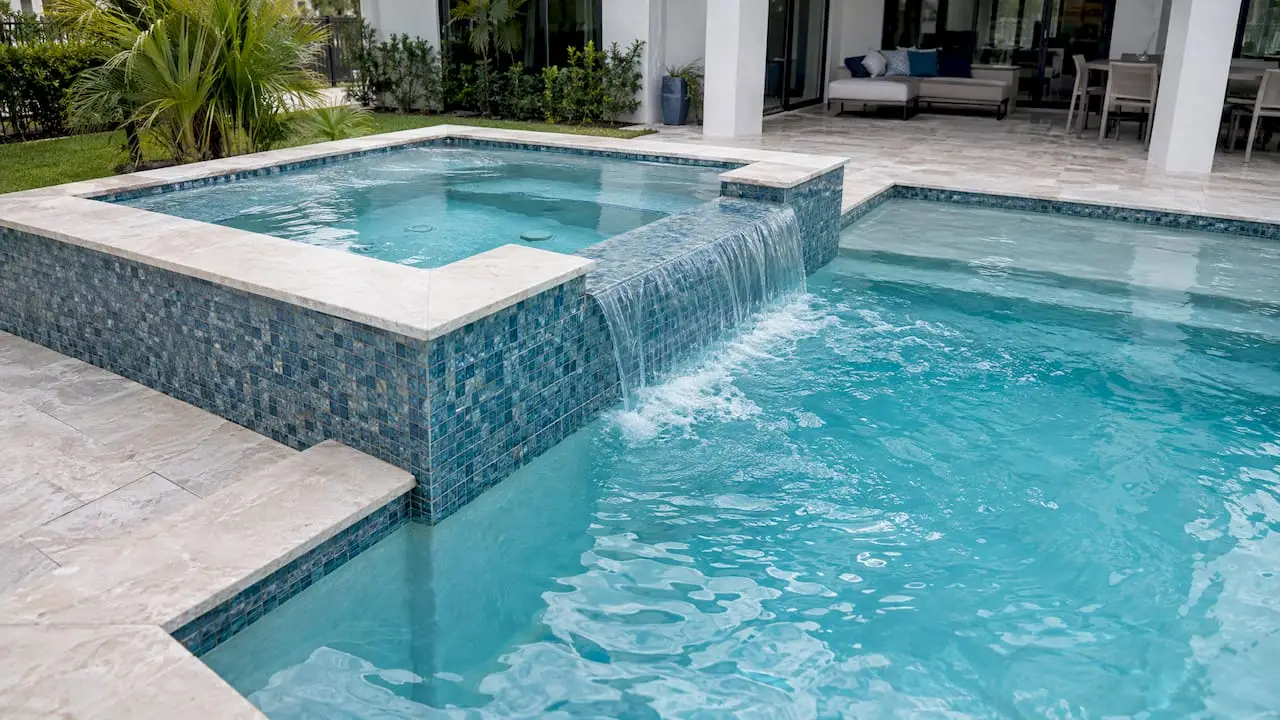
Automation helps too. Scheduled speeds let a variable-speed pump run low for filtration and higher for features without you touching a dial. You can read what to expect in our guide to smart pool automation.
If you are early in planning and want to see how equipment, layout, and features fit together, browse our Florida pool design ideas.
Agua Pools’ Approach to Pool Pump Sizing
Agua Pools considers pump sizing during the design process rather than treating equipment selection as an afterthought. Our in-house team coordinates pool layout, plumbing, filtration and water features to help match the circulation system to the finished pool.
For homeowners throughout North and Central Florida, we recommend evaluating actual flow requirements, selecting energy-efficient Hayward equipment and accounting for future additions such as spas or water features. This coordinated approach supports reliable circulation and long-term equipment performance.
Pool Pump Sizing FAQ
What Size Pool Pump Do I Need for a 12,000-Gallon Pool?
A 12,000-gallon pool needs about 25 GPM for an 8-hour turnover or 20 GPM for a 10-hour turnover. Most pumps in the common residential range clear that easily, so the choice usually comes down to efficiency, your filter’s rating, and any spa or water feature. Confirm the number on the pump curve at your actual head.
What Size Pump Is Needed for a 16×32 Inground Pool?
That depends on depth. With a 3-foot shallow end and 8-foot deep end, the pool holds about 21,120 gallons and needs 35 GPM for a 10-hour turnover or 44 GPM for 8 hours. Choose a pump whose curve delivers that flow at your system’s head, and check that your pipes and filter can carry it.
Is It Okay to Oversize a Pool Pump?
It is not recommended. ENERGY STAR notes that an oversized pump uses more energy for the same water and stresses pipes and the filter. A pump with a little headroom is fine, but a much larger one does not clean faster.
Is There a Big Difference Between 1 HP and 1.5 HP?
The difference depends on the specific pump models and the pool’s total dynamic head. A 1 HP pump may provide adequate circulation for a straightforward residential pool, while larger or more complex systems may require additional capacity. Compare Hayward pump performance curves and Weighted Energy Factor ratings rather than horsepower alone.
What Is a Good Pool Pump Flow Rate?
A good flow rate meets your turnover target, stays within your pipe velocity limits, and stays under your filter’s maximum rating. For many pools that falls between 20 and 50 GPM, but your volume and plumbing decide the exact figure.
Related Pool Equipment Resources
Get the Right Pump for Your Pool
If you are replacing a pump, upgrading equipment, or planning a new pool, we can help you match the equipment to your pool instead of guessing from a label. We carry pumps, filters, heaters, heat pumps, sanitization, and cleaners through our pool equipment page, and our team designs the hydraulics for new builds and remodels.
Planning a bigger change? See how a new pool comes together through our new pool construction service, or talk to us about pool remodeling if your current equipment no longer fits the pool you have.