
Pool Construction Timeline in Florida: Stage by Stage
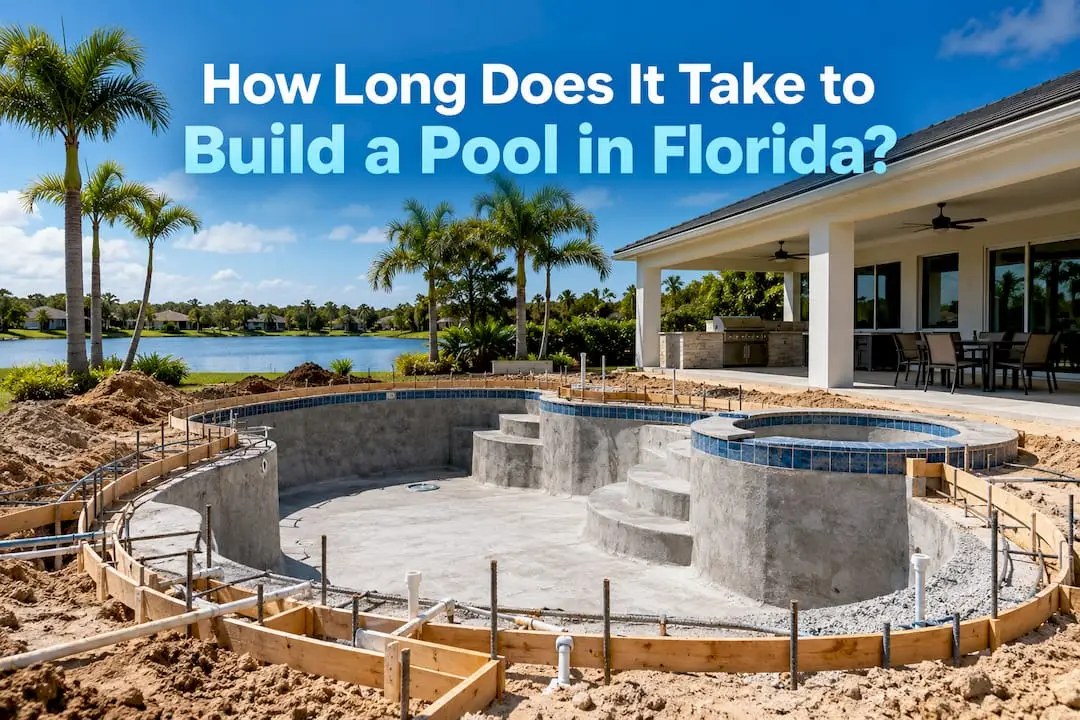
Building an inground pool in Florida often takes approximately 8–12 weeks of construction for a relatively straightforward project, although custom concrete pools with spas, screen enclosures, decking, and outdoor living features may take several months or longer. Design, engineering, permitting, weather, inspections, and construction complexity all affect the final timeline.
For homeowners throughout North and Central Florida, understanding the pool construction timeline helps establish realistic expectations before work begins. Agua Pools designs and builds custom swimming pools in Ocala, Daytona Beach, Tallahassee, Palm Coast, St. Johns, and surrounding communities.
The Short Answer: What a Realistic Range Looks Like
Pool construction timelines vary considerably depending on whether the project involves a straightforward inground pool or a custom design with additional outdoor living features. The following estimates illustrate how project complexity can affect construction schedules throughout Florida.
| Project Type | Typical Planning Range | What Affects the Timeline |
|---|---|---|
| Standard inground pool | Approximately 8–12 weeks of construction | Pool type, inspections, weather, and site conditions |
| Custom pool with additional features | Several months, potentially six or more | Spa, water features, screen enclosure, outdoor kitchen, pavers, and landscaping |
These are general planning estimates, not guaranteed completion dates. Design, engineering, and permitting may add time before construction begins. A custom concrete pool with multiple outdoor living features typically requires more coordination than a straightforward pool installation.
Stage 1: Design and Contractor Selection
Pool design and contractor selection can take several weeks, depending on the complexity of the project, design revisions, and homeowner decisions. Finalizing the pool shape, dimensions, spa, decking, and outdoor living features before construction helps reduce changes that could delay the project.
This is the cheapest place to save time. Every change you make here costs a conversation. Every change you make after excavation costs a change order and a pause.
Decide these early:
-
Shell type and shape
-
Spa, tanning ledge, water features and lighting
-
Whether you want a screen enclosure, which affects the barrier plan
-
Deck material, pavers, pergola, kitchen or fire feature
-
Where equipment sits and how construction equipment reaches the yard
A 3D design preview is useful because it exposes conflicts on screen, such as a pergola that crowds the spa or a kitchen too far from the gas line, rather than in a muddy yard. Our custom pool design process is built around that collaborative 3D review, so decisions are made before the permit set is drawn.
Stage 2: Engineering and Permits
Pool permitting timelines vary by Florida city and county. Some applications may be approved within weeks, while others take longer because of engineering requirements, plan revisions, or building department workloads. A pool builder can prepare complete applications and respond to requests, but cannot control the municipality’s review schedule.
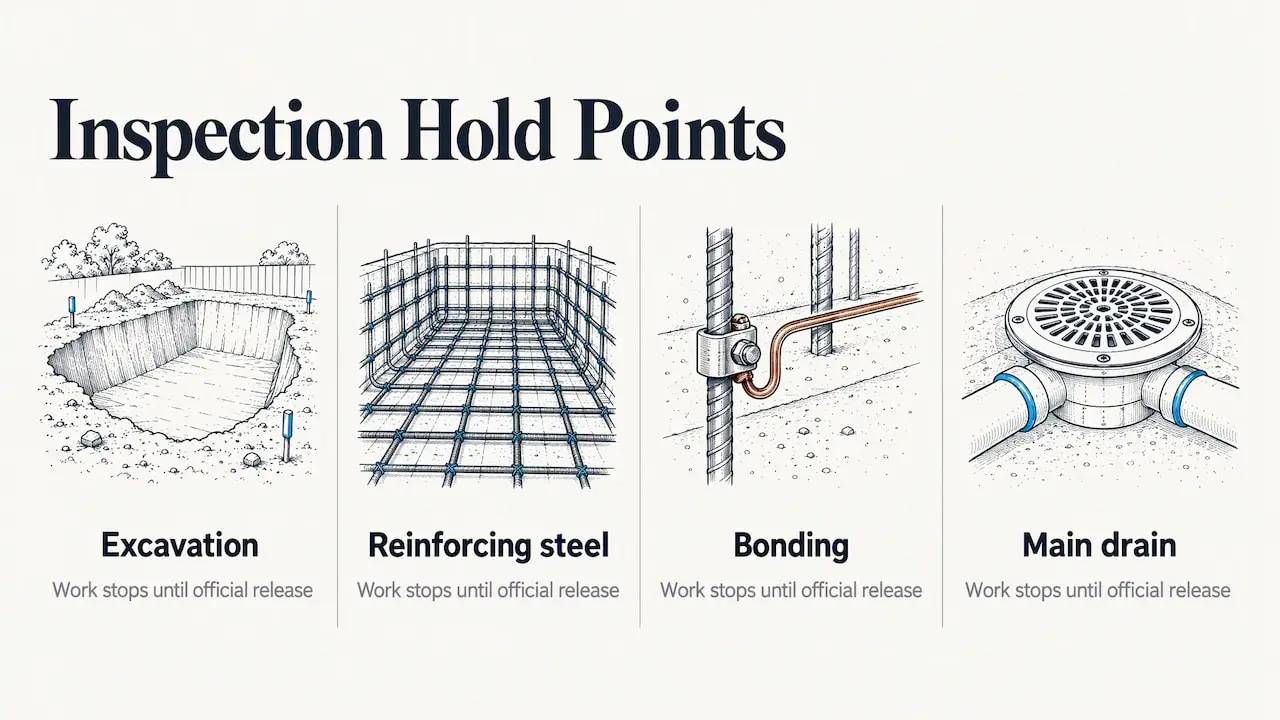
In Florida, the permit also sets up the inspection schedule. Florida Building Commission materials identify inspection points around excavation, reinforcing steel, bonding and the main drain. Each one is a hold point: work stops until the building official releases that portion.
Rules also vary across our service area. A project in Tallahassee, one in St. Johns County and one in Daytona Beach each go through a different building department, and processing times will differ. Ask your builder how long recent permits have taken in your jurisdiction, not what the average is statewide.
HOA approval is a separate step in many neighborhoods. It is not a government permit, but it can hold up your start date just as long. Submit it alongside the permit set rather than after.
Stage 3: Site Preparation and Excavation
Site preparation and excavation may take approximately one week for a straightforward project, although access restrictions, soil conditions, groundwater, and weather can extend the schedule.
Before excavation begins, confirm property lines, easements, underground utilities, and equipment access. Soil conditions can also affect construction. Loose soil, clay, and groundwater may require additional preparation or adjustments to the excavation plan. Locating utilities does not establish whether the soil is suitable for the planned construction.
That is why a simple-looking backyard can still produce surprises on dig day. A credible schedule includes:
-
A site visit and access plan
-
Utility locating
-
A soil review
-
A plan for hauling dirt away
-
A contingency for what the excavation reveals
Florida’s high water table and sandy soils are common talking points, so ask your builder how they handle groundwater on your lot. A wet excavation can add days.
Stage 4: Steel, Plumbing and Electrical Rough-in
Reinforcing steel installation, plumbing, and electrical rough-in may take approximately one to two weeks, depending on pool complexity, crew scheduling, and inspections.
This is where inspections begin to matter. The steel and bonding typically need to be inspected before concrete is placed. If the inspector can’t come until Thursday, the shell waits until Thursday. Plumbing is also pressure tested, and a failed test means fixing and retesting.
One point on bonding: Florida’s Swimming Pool Electrical Safety fact sheet tells homeowners to check with the local building or planning department for required permits and inspections. It also notes that the final electrical and barrier inspection must be completed before the pool is filled in applicable cases. Ask your builder to list every inspection, so none is a surprise.
Stage 5: Shell and Curing
This is where pool type changes the calendar the most. Fiberglass and vinyl systems generally move faster, because major components are manufactured off site. Concrete or gunite requires structural work on site and curing time.
Most custom Florida pools are concrete, because it lets the design follow your lot rather than a catalog shape. That freedom is the reason the shell takes longer. The concrete is placed, then it has to cure to the specified strength before the next trades go in.
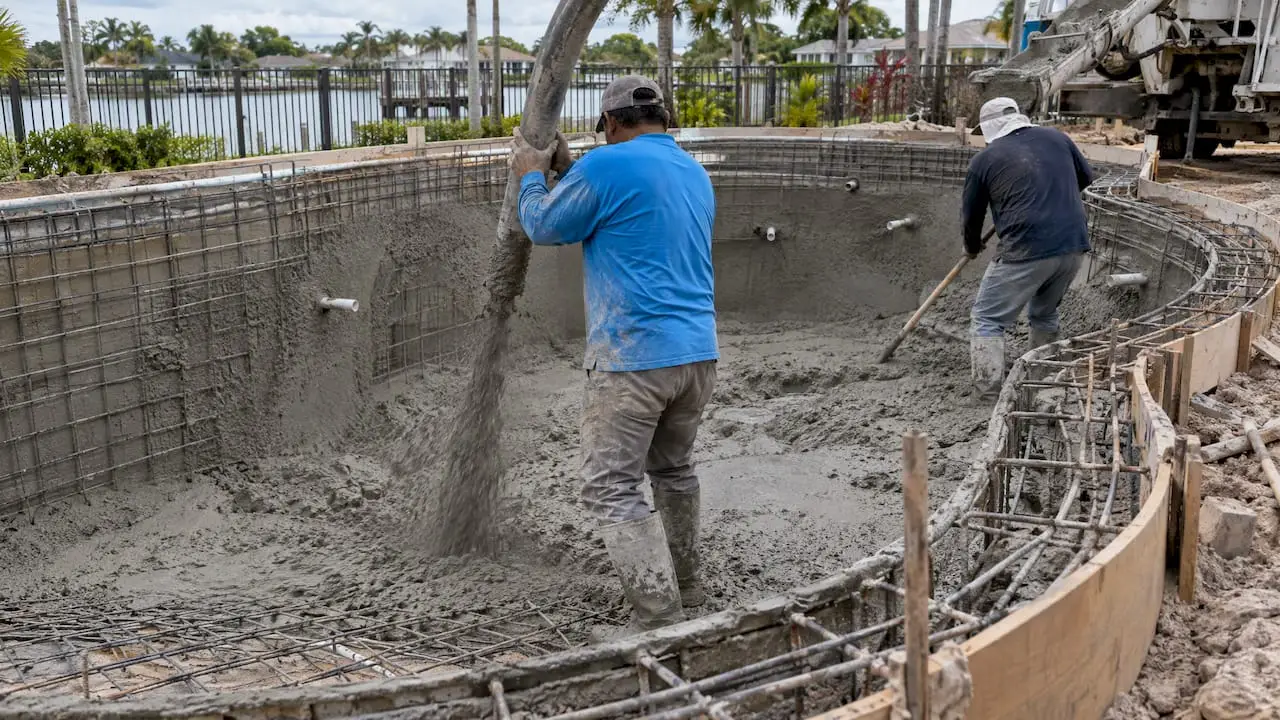
Don’t accept “a few days” as a curing plan. Ask what the engineer or the finish manufacturer requires.
Stage 6: Tile, Coping and Decking
After the shell, crews set waterline tile and coping, then build the deck. Drainage matters here, since a deck that sheds water toward the house is a problem you can’t fix cheaply later.
This is also when outdoor-living extras are scheduled. A pergola, fire feature or outdoor kitchen may be built in parallel with decking or after it, depending on utilities and crews. If one company builds everything, these trades can overlap. If the pool builder hands each piece to a separate subcontractor, each handoff can add a gap. Coordinating pool construction, decking, and outdoor living features during the planning process helps reduce scheduling conflicts between trades. Explore our range of work on our outdoor living page.
Stage 7: Equipment, Bonding and Barrier
Pumps, filters, heaters or heat pumps, sanitation, lighting and automation get installed and checked. Our pool equipment page covers what we supply.
The barrier is the item that most often sits on the critical path late in the job. The Florida material describes a 48-inch minimum barrier height, openings no larger than 4 inches in relevant configurations, and outward-opening self-latching gates. Fences, screen enclosures, door alarms and gates all play into it. Settle the barrier approach during design, not after the pool is plastered.
Stage 8: Interior Finish
The finish is where generic blog countdowns fail. The manufacturer’s instructions govern. For example, the Diamond Brite technical data sheet says a new concrete shell should cure at least 28 days before application. It also sets requirements for surface preparation, water quality, mixing and startup.
That means a finish date is not simply “the day after decking.” Ask which finish product is specified and have the startup procedure named in writing.
Stage 9: Fill, Startup and Final Inspection
After the interior finish is applied, the pool is filled according to the finish manufacturer’s instructions. Startup includes water chemistry adjustments, equipment testing, and a homeowner walkthrough. Required inspections and final approvals must also be completed before the pool is used.
A pool that looks complete may still require equipment adjustments, water balancing, or final approvals before swimming is permitted. Allow time for any necessary corrections and confirm that all required inspections are complete before using the pool.
What the Full Timeline Looks Like for a Custom Florida Pool
Here is the sequence as a milestone list, which is the most useful way to hold a builder accountable:
-
Permit issued
-
Layout and excavation approved
-
Steel inspection passed
-
Plumbing pressure test passed
-
Shell cured to the specified requirement
-
Coping and deck drainage complete
-
Equipment and bonding inspected
-
Finish applied
-
Startup and final inspection complete
A quoted completion date should say which of these it includes. A date that covers only construction is not a date you can swim.
What Slows a Florida Pool Build
Several factors can extend the pool construction timeline in Florida:
-
Permit review: City and county building departments have different processing times and inspection requirements.
-
Weather: Heavy rain, storms, and hurricane season can interrupt excavation, concrete work, and decking installation.
-
Soil and groundwater: Unexpected excavation conditions may require additional preparation or drainage solutions.
-
Design changes: Modifications after construction begins can delay materials, scheduling, and inspections.
-
Additional features: Spas, screen enclosures, outdoor kitchens, and extensive decking require additional construction work.
-
Subcontractor scheduling: Coordinating multiple trades can create delays between construction stages.
-
Inspections: Certain construction phases cannot proceed until required inspections are completed.
Planning the pool design carefully, understanding local permitting requirements, and maintaining communication with your builder can help reduce avoidable delays.
How to Keep the Schedule Honest
A realistic pool construction schedule should identify major milestones, responsibilities, and potential delays before work begins.
-
Clarify the timeline: Ask your builder to distinguish estimated construction time from design, permitting, and inspection periods.
-
Finalize the design: Confirm the pool shape, spa, decking, enclosure, and other features before submitting plans for permits.
-
Review inspection requirements: Understand which construction stages require approval before work can continue.
-
Confirm materials and finishes: Identify the interior finish, equipment, and other major products that may affect scheduling.
-
Discuss site conditions: Ask how unexpected soil, groundwater, or access problems will be handled.
-
Understand trade coordination: Confirm who manages construction crews, subcontractors, and scheduling between phases.
A detailed construction schedule cannot eliminate every delay, but it helps homeowners understand what to expect throughout the project.
FAQ
How long does it take to build a pool in Florida?
Plan on about 8 to 12 weeks of construction for an average in-ground pool, plus design and permitting before it. A custom pool with a spa, enclosure and outdoor kitchen can take several months. Your local permit queue and the weather are the two biggest unknowns.
What are the stages of pool construction?
The standard order is design, permits, excavation, steel and plumbing and electrical rough-in, shell, tile and decking, equipment, interior finish, then fill and startup. Inspections sit between several of these stages. The final electrical and barrier inspection comes before you can swim.
Why do some pools take six months or more?
Custom inground pools in Florida can take six months or longer when projects involve complex designs, spas, screen enclosures, outdoor kitchens, or extensive decking. Permitting delays, weather, site conditions, inspections, and construction scheduling can also extend the timeline. The total project duration may include design and permitting before construction begins.
Can I swim as soon as the water is in?
Not necessarily. The water must be balanced, the equipment commissioned, and the final inspection passed. Follow your finish manufacturer’s startup instructions as well.
Related Pool Construction Resources in Florida
Plan Your Florida Pool Construction Project With Agua Pools
Understanding the pool construction timeline helps homeowners prepare for design, permitting, construction, and inspections. Agua Pools provides custom swimming pool design, construction, and outdoor living solutions throughout North and Central Florida, including Ocala, Daytona Beach, Holly Hill, Palm Coast, St. Johns, Jacksonville, and Tallahassee.
Explore our new pool construction services, custom pool designs, and completed pool projects. Contact Agua Pools to discuss your project, design preferences, and estimated construction timeline.