
The best pool shade for most Florida homes is a permanent structure over the lounge area, such as a pergola or a covered patio, with a screen enclosure where bugs and sun both matter. Shade sails, retractable awnings and umbrellas cover the budget end, and trees or hedges add shade without a permit. Florida’s heat, strong UV and hurricane-season winds decide which one lasts. This guide compares every option so you can match one to your yard, whether you live in Ocala, Daytona Beach, Palm Coast, St. Johns, Jacksonville or Tallahassee.
Quick Answer
-
Shade the deck and seating zones rather than the whole pool. Water that stays in the shade stays more comfortable, and a pool covered end to end can run cooler and lean harder on the heater.
-
Permanent structures (pergolas, covered patios, screen enclosures) handle Florida wind best, but they usually need a building permit.
-
Shade sails are the lowest-cost way to cover a large area, but they are tension structures that should come down before severe weather.
-
Posts and footings must stay clear of the pool shell, plumbing and the required pool barrier.
-
Landscaping is the gentlest option, and it works best as a layer on top of a built structure.
Use this table to narrow the field before you read the details. Costs for shade sails and awnings come from published industry ranges and cover typical installations. Pergola, patio cover and enclosure prices depend on size, materials and site, so they are quoted per project.
| Option | Shade level | Wind performance | Upkeep | Typical cost | Permit likely? |
|---|---|---|---|---|---|
| Pergola with open slats | Partial | Good | Low to moderate | Quoted per project | Yes |
| Pergola with solid or louvered roof | High | Good when engineered | Low to moderate | Quoted per project | Yes |
| Shade sail (HDPE) | Moderate to high | Fair, remove in storms | Fabric replaced over time | About $300 to $2,000 per sail plus hardware | Often for posts |
| Retractable awning | High when open | Fair, retract in wind | Fabric and motor care | About $1,500 to $6,500 | Sometimes |
| Umbrella | Small area | Poor in gusts | Close when not in use | Lowest of the group | No |
| Covered patio or cabana | Full | Excellent | Low | Quoted per project | Yes |
| Screen enclosure | Partial UV reduction, full bug protection | Engineered to code | Screen and frame care | Quoted per project | Yes |
| Trees and hedges | Variable, grows over time | Depends on species | Trimming and debris | Plant cost | No |
Why Pool Shade Is Different in Florida
Pool shade must handle glare, heat radiating from decking, wind exposure and changing sunlight throughout the day. As The Awning Company explains, effective poolside shade requires careful placement and coverage rather than simply installing a canopy.
Florida adds three important considerations.
Heat. Pool decking can become uncomfortable under direct summer sunlight. Shade helps, but surface materials also matter. Our guide to cool deck options for Florida pools compares surfaces designed for greater barefoot comfort.
UV exposure. Water reflects ultraviolet radiation, increasing the importance of sun protection around swimming pools. Azenco Outdoor discusses combining shade with other protective measures, including sunscreen, hats and sunglasses.
Wind. Florida’s tropical storms and hurricanes make structural design, anchoring and manufacturer wind ratings especially important. Permanent shade structures must meet applicable building requirements, while removable fabric systems may need to be taken down before severe weather.
Think in Zones, Not One Big Roof
Before comparing products, decide where people actually sit and swim. Azenco Outdoor recommends planning by activity zone instead of covering the whole deck with one roof. A typical Florida layout has three zones:
-
Dining or kitchen zone. Needs the most complete cover, ideally with a solid roof and ventilation. See our notes on outdoor kitchen ventilation for Florida patios and lanais.
-
Lounging zone. Needs afternoon shade, which often means the west side of the pool.
-
Shallow end or sun shelf. Where children play and where a partial cover pays off most.
A west-facing pool usually needs stronger afternoon coverage, and a pool beside a sliding glass door can benefit from cover that also shades the room behind it, according to The Awning Company’s guidance on site assessment. Track where the shadows fall at 11 a.m., 2 p.m. and 5 p.m. before you pick anything.
Pergolas and Shade Structures
Pergolas are a popular permanent option for shading poolside seating and dining areas. Open-slat roofs provide partial shade and airflow, while solid or adjustable louvered roofs offer greater coverage and potential rain protection. Nassau County Pool Services discusses these different pool shade structure designs.
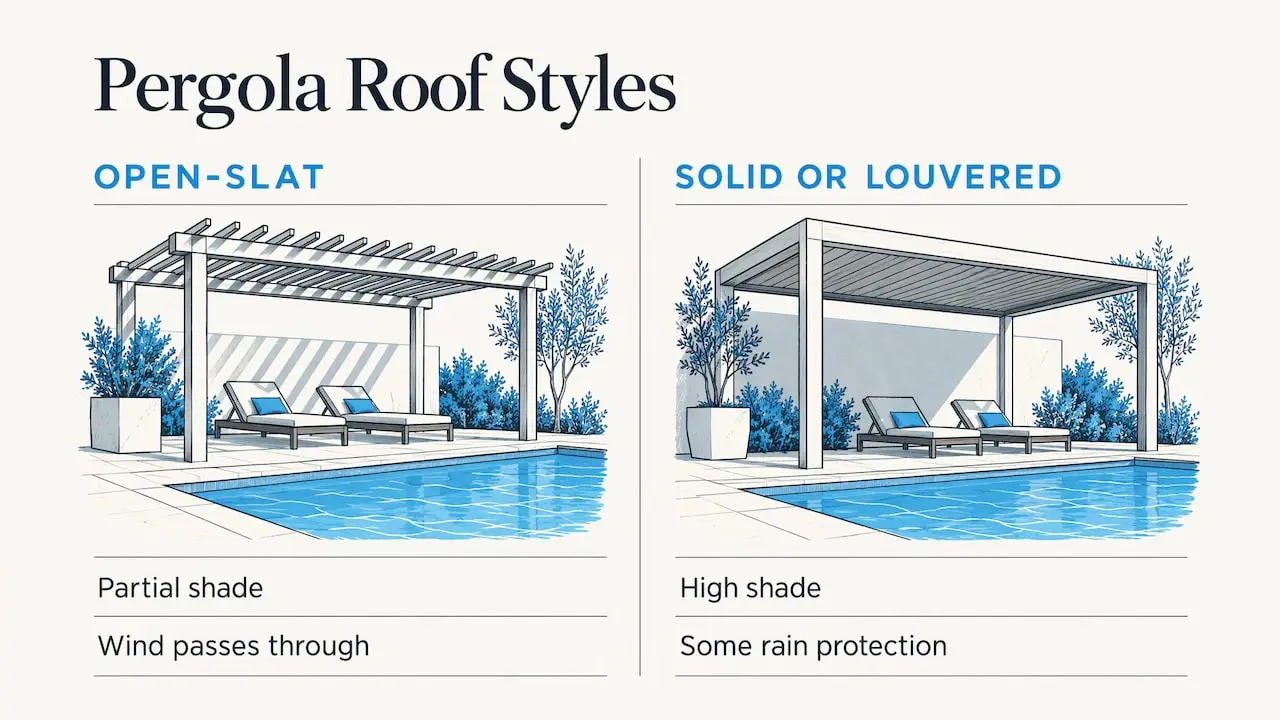
For Florida backyards, aluminum pergolas offer an alternative to wood because they generally require less maintenance and resist moisture-related deterioration. However, wind performance depends on the structure’s engineering, anchoring and installation. Agua Pools incorporates these features into complete backyard designs, as shown on our custom pergolas page.
Best for: Poolside lounging, outdoor dining and permanent shade.
Watch for: Structural engineering, wind ratings, permits and footing placement near existing pool plumbing and decking.
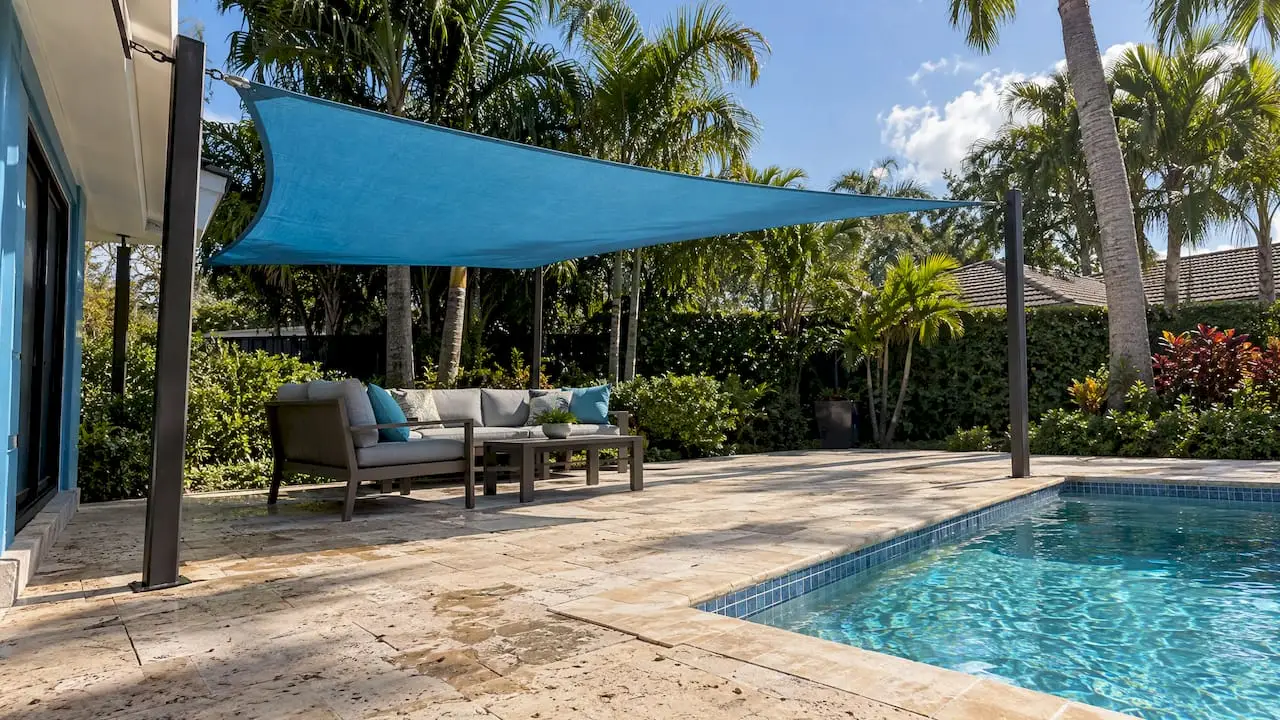
Shade Sails Over a Pool
Shade sails are fabric panels stretched between anchor points, and they are the most searched option for a reason: they cover a lot of area for the money. Outdoor Workout Supply puts typical costs at roughly $300 to $2,000 per sail, plus installation hardware.
If you go this route, these details decide whether it works:
-
Anchor spacing. Shade sails require properly positioned attachment points and engineered anchoring to maintain tension and resist wind loads. Post locations and footing distances must account for the pool shell, decking, underground plumbing and applicable building requirements. Avoid relying on a universal minimum distance from the pool edge.
-
Fabric. Breathable HDPE knit lets hot air escape. A waterproof-coated fabric can trap heat and collect rainwater, which is why it is rarely the right call over a pool.
-
Hardware. Stainless steel turnbuckles at the corners help prevent flapping and sagging.
-
Coverage. Partial coverage over the shallow end and lounging area usually works better than one giant sail spanning the pool.
What Are the Disadvantages of a Shade Sail?
A sail gives targeted shade, not complete coverage from morning to sunset, because the shadow moves. Many sails are built for UV relief and airflow rather than rain protection. And a sail is a tension structure rather than a permanent roof, so posts, hardware and attachment points carry the real load, as KGORGE’s wind guide explains. The practical answer is good geometry, strong anchors and taking the fabric down before severe weather.
Retractable Awnings
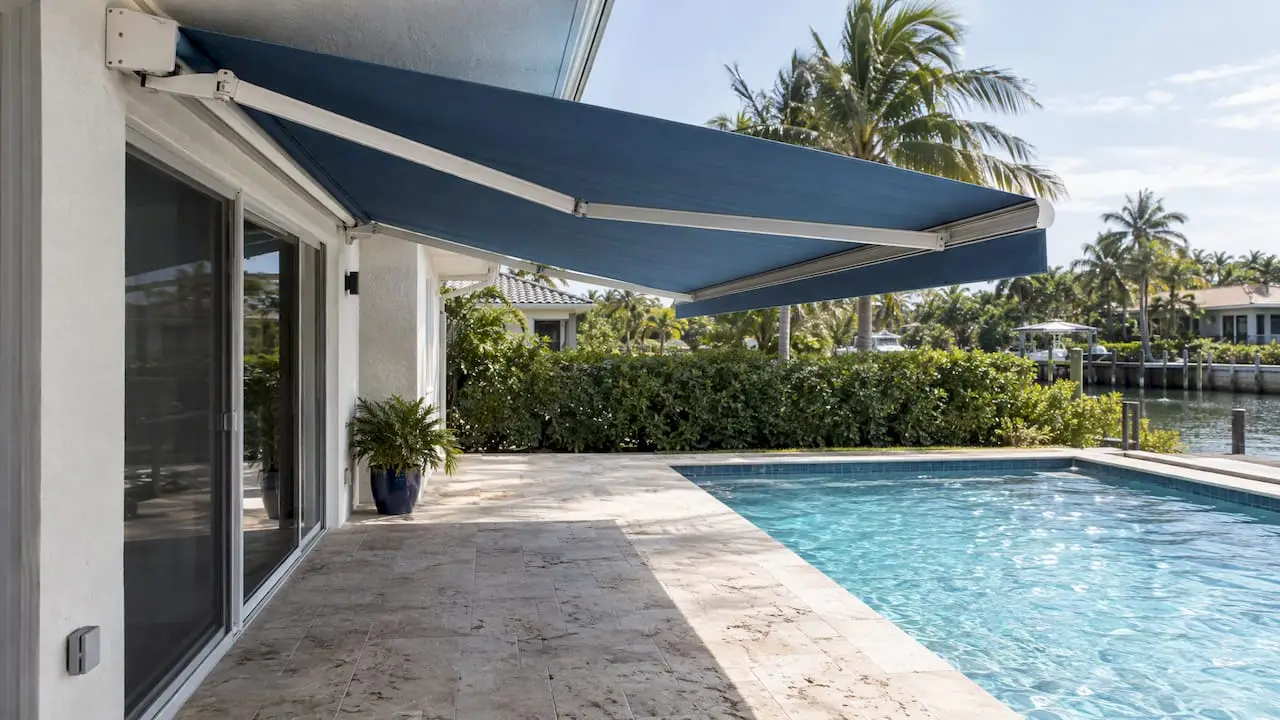
An awning mounted to the house shades the nearest part of the deck and retracts when you want sun or when wind picks up. Outdoor Workout Supply lists roughly $1,500 to $6,500, with motorized systems at the higher end. Awnings suit homes where the pool sits close to the back wall or sliding doors. They reach only as far as their arms extend, so they rarely cover a whole seating area far from the house. Retract them whenever gusts are forecast.
Umbrellas
A large umbrella is the easiest start. It costs less than anything else on this list, moves where the sun moves, and rarely needs a permit. The trade-off is wind: umbrellas handle gusts poorly, so close and secure them whenever weather turns. They work well as a flexible supplement to a pergola or a hedge line, giving you a few extra feet of shade exactly where you want it.
Covered Patios and Cabanas
A roofed patio or cabana gives full shade and good rain protection, and it is permanent. It turns the pool area into a true room that you can use in a summer afternoon storm. This is the most complete answer if you also want an outdoor kitchen, a TV or ceiling fans. We often design covered areas together with the pool so that the roofline, drainage and sightlines all work as one plan. Browse what that looks like on our outdoor living page.
Screen Enclosures
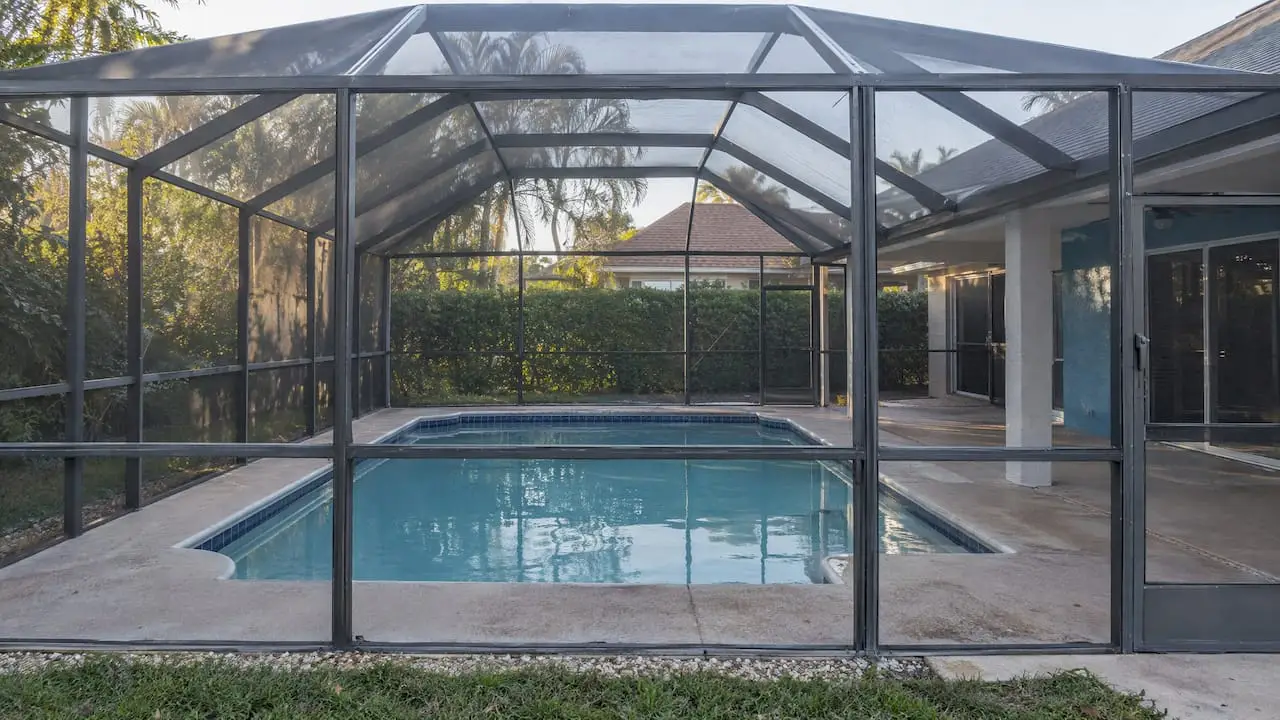
A screen enclosure is a Florida classic for a reason. It keeps out mosquitoes and debris, cuts some sun, and lets you swim in the evening without being bitten. Screens reduce UV and heat to a degree, but they are not a full shade solution, so many homeowners add a solid-roof pergola or cover inside the enclosure for the seating area. New enclosures in Florida generally require a building permit, and the frame must be designed for local wind loads.
Trees, Hedges and Landscaping
Plants are the quietest way to add shade, and they cost the least. The Spruce suggests planting fast-growing arborvitae along the pool, using the house’s shadow, scattering umbrellas, and building a short wall for patches of shade.
For Florida yards, keep these principles in mind:
-
Plant away from the pool shell. Roots can damage decking and plumbing, so plant at a distance and use hedges or tall screening rather than large trees directly at the edge.
-
Mind the debris. Leaves, flowers and fruit end up in the skimmer, so choose species that drop little.
-
Be patient. Young plants give little shade for several seasons, so pair them with an umbrella or a structure while they grow.
-
Think about the house. Placing the shallow end closest to your home gives that area evening shade, a layout idea also in The Spruce. If you are still planning the pool itself, our pool design ideas for Florida homes cover layouts that work with the sun.
For a local species list, ask a certified landscape professional in your county, since conditions in Tallahassee’s clay soils differ from sandy coastal Daytona Beach.
Permits, Wind and Safety Rules
This is the section that saves the most money, so read it before you buy anything.
Permits. Check with your local building department. Freestanding structures with permanent footings, such as pergolas and cantilevers, are the ones most likely to need permits and inspections, while portable umbrellas typically do not. Rules vary by city and county, so Ocala and Marion County, Palm Coast, St. Johns County, Volusia County, Duval County and Tallahassee may each ask for different documents. Many Florida jurisdictions apply wind-load design that your contractor must follow.
Pool barrier. Florida requires pool barriers with specific height and gate features, and posts should not give a child a foothold to climb over the fence. Read our summary of pool fence requirements in Florida before you place posts near the barrier.
Footings. Keep posts clear of the pool structure, with footings that do not sit on the bond beam, plumbing or equipment lines, as the Nassau County Pool Services guidance advises.
Wind. Florida’s hurricane exposure makes proper anchoring, wind ratings and storm preparation essential. KGORGE’s shade sail wind safety guide discusses how wind loads affect fabric, posts and attachment points. Follow manufacturer instructions for removal and take down removable shade sails before severe weather. Permanent structures should be designed and installed to meet applicable Florida wind-load requirements.
Water temperature. Shading the deck and seating areas rather than the entire pool allows more sunlight to reach the water. Extensive shade can reduce solar warming, which may affect pool temperatures and heating needs depending on the season.
Costs and Maintenance at a Glance
Budget for two things: the install and the upkeep.
-
Shade sails are the lowest-cost permanent-post option. Expect to replace fabric over time, and plan for seasonal takedown.
-
Awnings have fabric and, if motorized, a motor to look after.
-
Umbrellas are cheapest, but they wear out fastest in sun and wind.
-
Pergolas and covered patios cost more upfront but need the least ongoing work, especially in aluminum.
-
Screen enclosures need periodic screen replacement after storms.
-
Landscaping needs regular trimming and cleanup.
We do not publish set prices because every pool and yard is different. We provide a written quote after the design stage.
Our Perspective on Pool Shade
Most shade problems we see start with buying the product first and thinking about the yard second. A sail or umbrella bought online can look right in the box and wrong beside a pool, with a post in the wrong place or fabric that moves every time the wind does.
Our collaborative 3D design process lets you see the pergola, roofline and seating zones before construction begins. Coordinating the pool, shade structures and outdoor living features during the design stage helps create a cohesive backyard while reducing unnecessary changes during construction.
For Florida homes, we lean toward permanent structures over the lounge and dining areas, with trees, hedges and umbrellas layered in around them. That combination handles the sun in summer and the weather in the fall, and it adds usable square footage to your home.
The Agua Pools Team
Plan Your Shade With Agua Pools
If you are building a new pool or remodeling an existing one, the best time to add shade is during design, when footings, electrical runs and sightlines can be planned together. We design and build custom pools, pergolas, screen enclosures, outdoor kitchens and fire features across North and Central Florida, with a single in-house team and a 3D preview of your yard before construction.
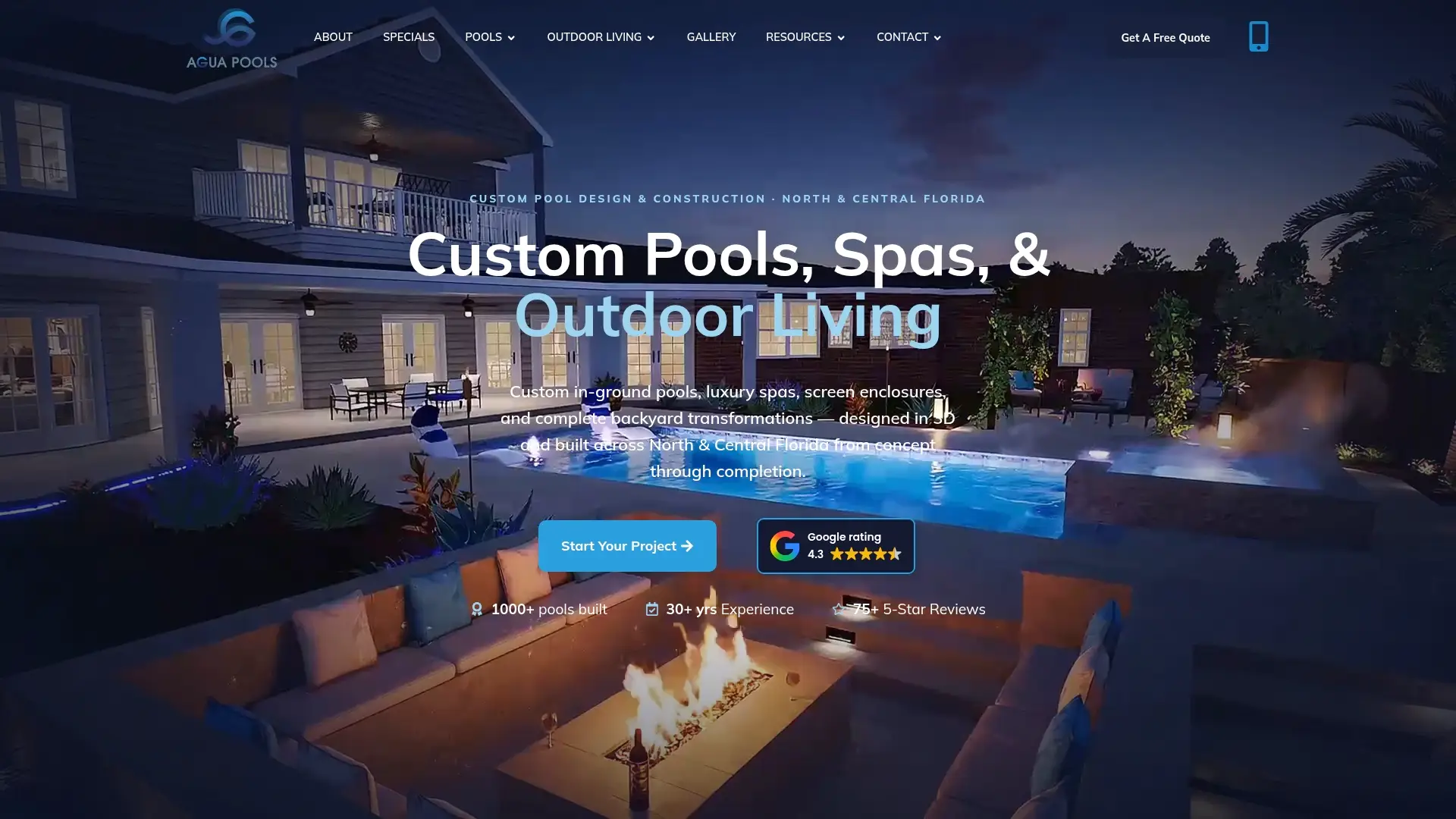
Start with our custom pool design service or see how a pool remodel can add a pergola or enclosure to an existing backyard. Local pages cover pool builders in Jacksonville and pool builders in Daytona Beach.
Frequently Asked Questions About Pool Shade
How Do I Shade My Pool From the Sun?
Start by shading the seating and lounge zones with a pergola, covered patio, sail or awning, then add umbrellas and plants around them. Shading the deck rather than the entire water surface keeps the pool warm and comfortable.
What Is the Cheapest Way to Shade a Pool Area?
Umbrellas cost the least, and a shade sail is the next step up at roughly $300 to $2,000 per sail plus hardware, according to Outdoor Workout Supply. Landscaping is low in cost too, but it takes seasons to grow. Permanent structures cost more upfront and last longest.
Do I Need a Permit for Pool Shade in Florida?
Often yes for anything with permanent footings, such as pergolas, covered patios and screen enclosures. Umbrellas typically do not need one. Rules differ between cities and counties, so call your local building department before you start.
Can a Shade Sail Survive a Florida Storm?
Shade sails vary in wind resistance depending on their materials, anchoring and installation. Even properly installed sails may need to be removed before severe weather. Follow the manufacturer’s wind limits and storm preparation instructions.
Ready to shade your backyard the right way? Contact Agua Pools for a custom design in Ocala, Daytona Beach, Palm Coast, St. Johns, Jacksonville, Tallahassee and across North and Central Florida.