
The best pool privacy ideas for a Florida backyard combine two or three layers: a solid fence or wall for the neighbor’s ground-level view, native hedges or trees to soften it, and a pergola or screen to block views from above and the side. No single option does everything. A fence blocks the sightline fastest, plants give the softest look, and overhead structures handle second-story neighbors. Whatever you choose must also respect Florida’s pool barrier law, your city or county setbacks and your HOA’s rules.
This guide compares privacy fencing, landscaping, hedges, privacy screens, pergolas, decorative walls and natural barriers on cost level, upkeep, durability and how much privacy each really gives. It also covers hurricanes, setbacks and permits for homeowners in Ocala, Daytona Beach, Ormond Beach, Palm Coast, St. Augustine, Jacksonville and Tallahassee.
Helpful Quick Answers
-
Layer your privacy. A wall or fence topped with plantings, or a fence paired with a tree, looks better and screens more than one feature alone, according to Garden Design.
-
A privacy fence around a pool is also a safety barrier. Florida’s statute requires a barrier at least 4 feet high on the outside, so keep gates self-closing and nothing climbable nearby.
-
In hurricane country, favor open or slatted designs, native shrubs and properly engineered structures over tall solid panels that catch wind.
-
Check setbacks, permits and HOA covenants before you buy anything. Rules differ in Marion, Volusia, Flagler, St. Johns, Duval and Leon counties and by neighborhood.
-
Plan privacy during pool design, not after. Fence lines, planting beds and structures are easier to place when the whole yard is drawn together.
Start With What You Are Hiding From
Privacy problems fall into three types, and each needs a different fix.
Ground-level views come from neighbors, the street or a shared property line. A fence, wall or dense hedge handles these.
Elevated views come from second-story windows and decks next door. Fences rarely help here. Overhead cover such as a pergola with shade panels, a tall tree canopy or a screen enclosure does the work.
Sound and a sense of exposure are the third piece. Plantings, water features and walls make a yard feel enclosed even when a few sightlines remain.
Walk your yard at the height where you actually sit, by the pool and at the lounge chairs, and note where eyes land from each neighboring window. Consider scale, style, cost, light, building codes, HOA rules and property-line setbacks together before choosing materials.
Privacy Fencing Around a Florida Pool
A solid fence is the most direct answer to a close neighbor. Options include solid wood, composite, vinyl, aluminum with privacy infill and masonry-faced panels. Because the fence usually doubles as your pool barrier, the safety rules come first.
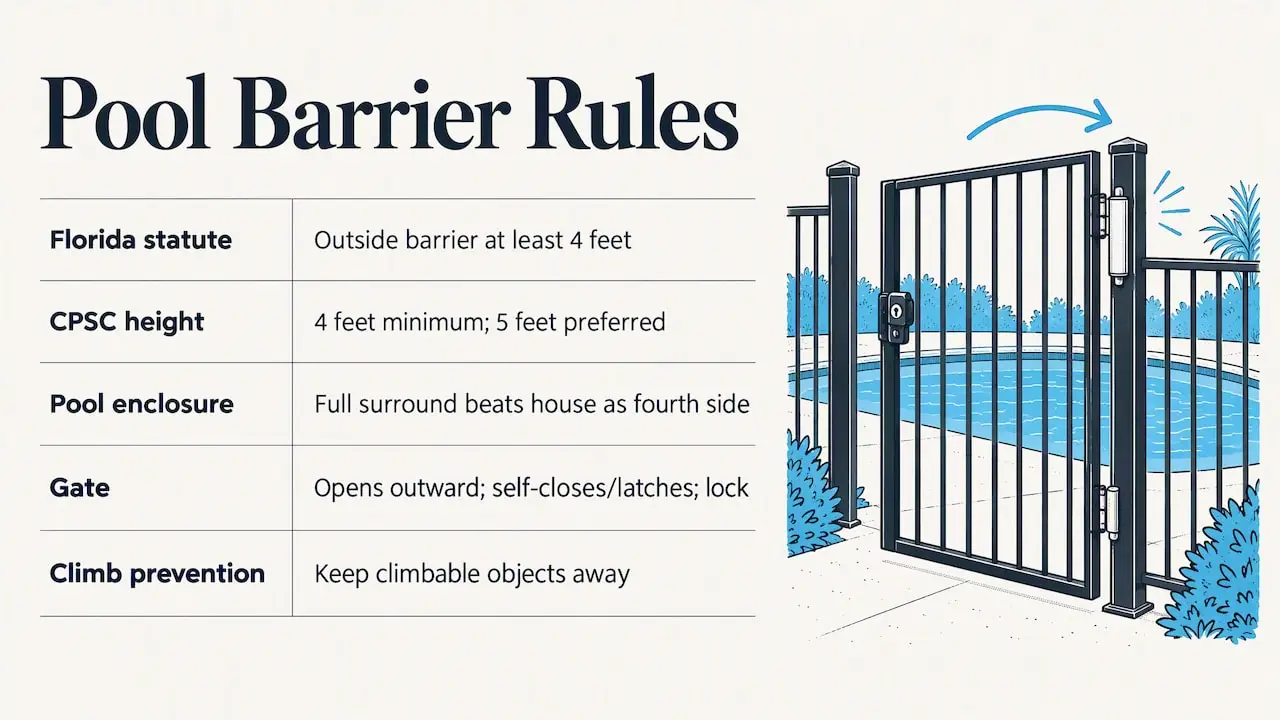
What the Pool Barrier Rules Require
Florida’s statute says a residential pool barrier must be at least 4 feet high on the outside. The federal Consumer Product Safety Commission goes further: its guidelines say a barrier that fully surrounds the pool beats one that uses the house as a fourth side, and that fences should be at least 4 feet, with 5 feet or higher preferred. The same guidance calls for gates that open outward and are self-closing and self-latching with a locking device, and for barriers placed so children cannot use permanent structures or equipment to climb them.
That last point matters for privacy design. Planters, benches, pool equipment and stacked firewood next to a fence can turn a compliant barrier into a climbable one. Our guide to Florida pool fence requirements walks through height, gates and code in more detail.
Setbacks, Permits and HOAs
Fence height and placement limits are set locally. Zoning rules usually dictate how tall a fence can be on a side or rear line and how far it must sit from the property line, and many HOAs add limits on materials and colors. Call your city or county building department, such as those serving Ocala, Jacksonville, Tallahassee or Palm Coast, and get HOA approval in writing before ordering. Corner lots and lots on easements often have stricter rules.
Hurricane Durability
Tall solid panels act like sails. Properly engineered posts, secure anchoring, rust-resistant hardware and designs with small gaps or louvers can help manage wind loads. Wood needs regular sealing in Florida humidity and can rot at the ground line. Aluminum and composite generally require less upkeep but can cost more up front.
Hedges and Natural Barriers
Plants give the softest look and can raise privacy as they mature. Garden Design recommends living screens that mix trees, shrubs, vines, ornamental grasses and perennials, noting that varied heights create a layered buffer while letting light and air through.
Choosing Plants for Florida
Pick species for your zone, from the sandy soils around Ocala to the salt air near Daytona Beach and St. Augustine. Wax myrtle is a native shrub that University of Florida extension describes as easy to care for and salt tolerant, and it can be pruned into a hedge or screen for privacy. Native plants can also work in screening designs to block unwanted views while supporting wildlife, as a North Carolina Sea Grant planting guide notes, and that guide mentions sweetbay magnolia as one option. Avoid planting tall species under power lines.
A practical layout puts taller evergreens at the back, medium shrubs in the middle and grasses or low plants in front.
Placement Around the Pool
Keep trees and large shrubs far enough from the water that roots will not lift decking and leaves, flowers and berries will not constantly foul the pool. Check mature size, not the nursery pot size. A hedge planted two feet from a fence in year one becomes a maintenance problem by year five.
Time and Upkeep
Hedges are the slowest option. Expect a season or more of growth before a young planting screens well, plus regular trimming, irrigation while establishing and fertilizing. In exchange you get shade, bird habitat and a barrier that sways in wind rather than breaking.
Privacy Screens, Lattice and Slatted Panels
Freestanding screens are the right tool for a specific spot: the lounge area, the outdoor shower, the hot tub or the equipment pad. They can be built from wood slats, lattice, metal or composite. Garden Design notes that lattice or slatted construction can provide privacy while admitting light, and that too many oversized barriers can make a yard feel boxed in.
Outdoor curtains and fabric panels are the most flexible option. Homes & Gardens points out that outdoor fabric can be tied up or down depending on how much privacy you want. In Florida, choose fade-resistant, mildew-resistant fabric and plan on taking panels down ahead of named storms.
Screen Enclosures as a Privacy Tool
If you already have, or want, a pool cage, the mesh you choose affects privacy. Manufacturer data from Phifer lists a pool-and-patio fiberglass screen for applications needing extra strength, a fine No-See-Um mesh for small insects that keeps ventilation and visibility, and a vinyl-laminated option for vertical privacy that is not meant for roofing. Denser mesh also affects engineering: the Texas Department of Insurance explains that screen enclosures experience wind loading differently from solid buildings and that mesh density matters when determining design wind loads. Ask your builder how any privacy mesh or solid lower panels affect the enclosure design. See our pool screen enclosures page for what we build.
Pergolas and Overhead Structures
Pergolas and trellises add shade and a feeling of enclosure, and they are the best answer to views from above. Homes & Gardens notes that pergolas or trellises can increase privacy and shade. Adding slatted side panels, climbing vines or retractable shade makes them work harder. Our custom pergolas are designed for Florida sun and storms, and they can double as the frame for an outdoor kitchen or lounge area. Attachment, footing and wind design matter more here than anywhere else, so have the structure engineered and permitted.
Decorative Walls and Feature Walls
A masonry or stucco wall gives the most solid, quiet and permanent privacy, and it can be faced with stone, tile or paint to match the house. Walls are also where you can add a wall fountain or a niche for lighting, tying privacy to your spas and water features. Garden Design suggests combining barriers, such as a wall topped with a fence, for added height and variety. Walls require engineered footings, may require permits depending on local requirements and are among the more expensive options to build, but generally need less upkeep afterward.
Pool Privacy Options Compared
This table compares general characteristics rather than prices, because cost depends on length, materials, site conditions and local permit fees. Ask for written quotes.
| Option | Privacy Level | Upfront Cost Level | Upkeep | Hurricane Durability | Best For |
|---|---|---|---|---|---|
| Solid privacy fence | High at ground level | Moderate | Low to moderate, depending on material | Good if engineered and set deep | Close neighbors, shared lines |
| Masonry or stucco wall | Very high | High | Low | Good when properly engineered | Permanent, upscale look |
| Hedges and trees | Moderate to high once mature | Low to moderate | Ongoing trimming and watering | Varies by species, maturity and maintenance | Softening hard lines, shade |
| Slatted or lattice screens | Moderate | Low to moderate | Low to moderate | Fair, depends on anchoring | Targeted spots like seating |
| Pergola with panels or vines | Moderate, strong from above | Moderate to high | Moderate | Good if engineered | Elevated views, shade |
| Outdoor curtains | Adjustable | Low | High in humid climates | Take down before storms | Flexible, seasonal privacy |
| Screen enclosure | Low to moderate by mesh | Moderate to high | Low to moderate | Needs engineering | Bugs plus partial screening |
Our Perspective on Layered Privacy
We have built more than 1,000 pools, and the privacy question almost always comes up in the first design meeting. Our view is that privacy should be designed into the yard, not bolted on after the pool is finished.
That is why we use a collaborative 3D design process. When you can see the fence line, the pergola and the plantings in your own yard before construction starts, you can judge sightlines from where you will actually sit, and we can adjust before anything is poured.
Because our in-house team handles the pool, the structures and the outdoor living features together, the fence, the screen enclosure and the pergola are planned as one system. That means fewer handoffs and fewer surprises with setbacks, barriers and climbable objects.
Agua Pools
Promo: Design Privacy Into Your Pool From Day One
If you are planning a new pool or remodeling an existing one, we can map fencing, screens, pergolas and planting areas into your 3D design so you see the private version of your backyard first. Explore custom pool design or our outdoor living services to see how it comes together.
Small lot? Our small backyard pool ideas show how compact designs can stay private and still feel open.
Practical Recommendations by Situation
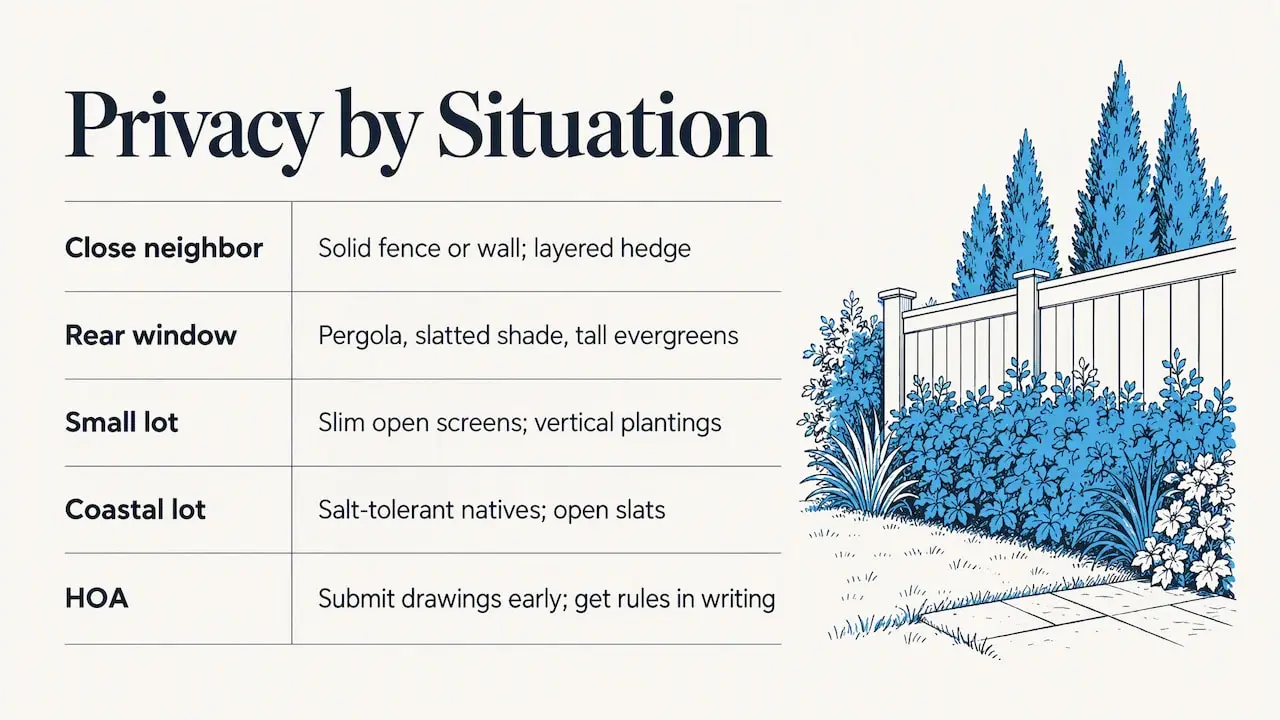
Close neighbor on one side: Install a solid fence or wall along that side, then plant a layered hedge on your side of it. The plants break up the hard line.
Second-story neighbor behind you: Add a pergola over the lounge area with slatted shade and a tall evergreen or two placed to block that window angle.
Small lot: Use slim, open-style screens and vertical plantings. Too many tall barriers shrink a small yard visually.
Coastal or storm-exposed lot near Daytona Beach or St. Augustine: Prioritize salt-tolerant natives, open slatted panels and engineered structures.
HOA community: Submit drawings early. Ask for allowed fence heights, materials and colors in writing.
The backyard makeover planning guide can help you sequence the pool, structures and landscaping so none of the privacy pieces has to be torn out later.
Pool Privacy Questions Florida Homeowners Ask
Can a Privacy Fence Also Be My Pool Barrier?
Yes, if it meets the code. Florida’s statute requires the barrier to be at least 4 feet high on the outside, and federal guidance prefers 5 feet or more. Gates should be self-closing and self-latching, and nothing climbable should sit beside it. Confirm details with your local building department.
What Is the Fastest Way to Get Privacy Around a Pool?
A fence, wall or privacy screen gives immediate coverage, while hedges need time to mature. Many homeowners install a fence first and plant behind or in front of it so the planting fills in over the following seasons.
Do I Need a Permit or HOA Approval for Privacy Features?
Often yes. Fences, walls, pergolas and screen enclosures are commonly permitted, and HOAs may limit height, material and color. Check with your city or county, whether that is Marion, Volusia, Flagler, St. Johns, Duval or Leon, and get HOA approval before building.
Are Hedges Practical Around a Pool in Florida?
They can be, when you choose salt- and drought-tolerant natives sized for the space and keep them back from decking and water. They need trimming and irrigation to establish, but they handle wind better than tall solid panels.
Build Your Private Pool in North and Central Florida
Whether you are in Ocala, Ormond Beach, Palm Coast, St. Augustine, Jacksonville or Tallahassee, we can design the pool and the privacy around it together. Contact Agua Pools to start a 3D design for your backyard, or see our work in Daytona Beach and Jacksonville.