
The best outdoor kitchen countertops for Florida are porcelain slabs and natural granite, with quartzite close behind. Concrete and tile can work well when they are sealed and installed correctly. Stainless steel suits shaded or coastal setups, but it gets very hot in direct sun. Indoor engineered quartz is the material to keep inside, because the resin can discolor under UV exposure. Florida adds sun, humidity, salt air and afternoon storms, so the right surface is the one that handles all four with a maintenance routine you will actually keep.
Quick Answer: Best Outdoor Kitchen Countertops for Florida
What are the best outdoor kitchen countertops for Florida homes? Porcelain and granite are excellent choices for their durability, heat resistance and ability to withstand outdoor conditions. Quartzite is another attractive natural stone option, while concrete and tile offer design flexibility with additional maintenance. According to Homes & Gardens’ outdoor countertop guide, porcelain is particularly suitable for outdoor kitchens because of its resistance to moisture and weather exposure.
For North and Central Florida homeowners, the right material depends on whether the kitchen is exposed to direct sunlight, coastal salt air or the protected environment of a screened lanai. Indoor engineered quartz is generally unsuitable for prolonged direct sunlight because UV exposure can affect its resin binder.
How Florida Weather Changes the Countertop Decision
A countertop in Ocala faces the same sun as one in Palm Coast, but the salt air, rain patterns and lanai coverage differ. Four conditions matter most.
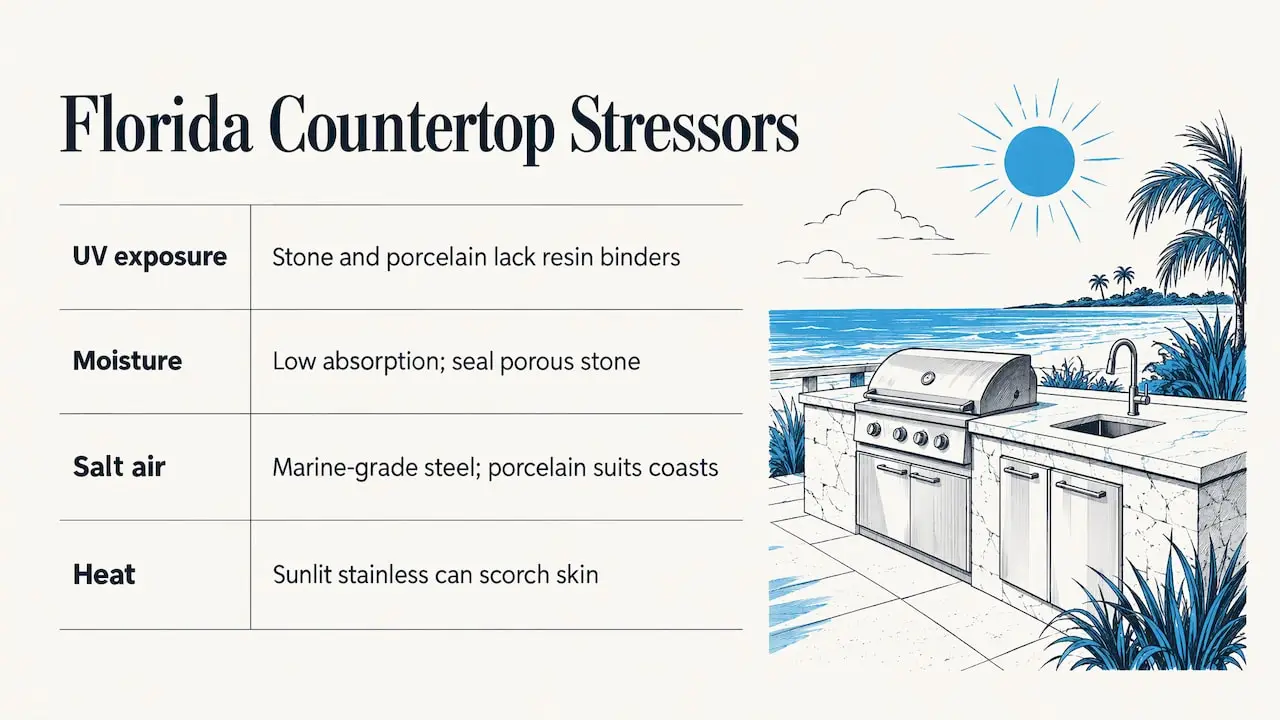
UV exposure. Intense sun fades and breaks down some resins, fillers and sealers. Natural stone and fired porcelain contain no resin binder to break down. Many engineered products do.
Humidity and moisture. Constant moisture feeds mildew in grout and in porous stone. A surface with low water absorption is easier to keep clean, and sealing helps where the material is porous.
Salt air. Homes near the Atlantic in Daytona Beach, Daytona Beach Shores and Palm Coast deal with salt on every surface. For coastal areas, Homes & Gardens points to marine-grade stainless steel as the stainless option. Porcelain is also a practical coastal choice because it needs little protection.
Heat. Grills, side burners and sun-baked slabs all add heat. Family Handyman’s expert reports that stainless steel can get extremely hot in direct sunlight, enough to scorch skin.
Freeze-thaw is rarely the issue in Florida, though a cold snap in Tallahassee can still drop below freezing. Low water absorption helps there too, so ask your fabricator for the absorption rating of any stone or tile you consider.
Granite: The Proven Natural Stone
Granite remains a popular choice for outdoor kitchen countertops in Florida because of its durability, heat resistance and natural appearance. However, slab quality and finishing methods matter. HGTV’s outdoor countertop guide explains that some heavily veined granite slabs contain fillers that may react poorly to prolonged UV exposure. For outdoor kitchens exposed to direct sunlight, choose a suitable slab and ask the fabricator about its finish and exterior performance.
Sealing requirements vary by stone. The Natural Stone Institute explains that some granite surfaces benefit from additional moisture protection while others may not require sealing. Florida homeowners should follow recommendations for their specific slab rather than assuming every granite countertop needs annual resealing.
Quartzite: Natural Stone With a Harder Look
Quartzite is a natural stone, often chosen for a marble-like appearance with more durability. Daltile lists it alongside porcelain and granite as one of three exterior countertop options. Treat it like granite: confirm that the specific slab is genuine quartzite and not a softer stone sold under a similar name, then seal it with an outdoor-rated penetrating sealer. Your fabricator can tell you the right interval for that slab.
Porcelain: Low Maintenance and Built for the Sun
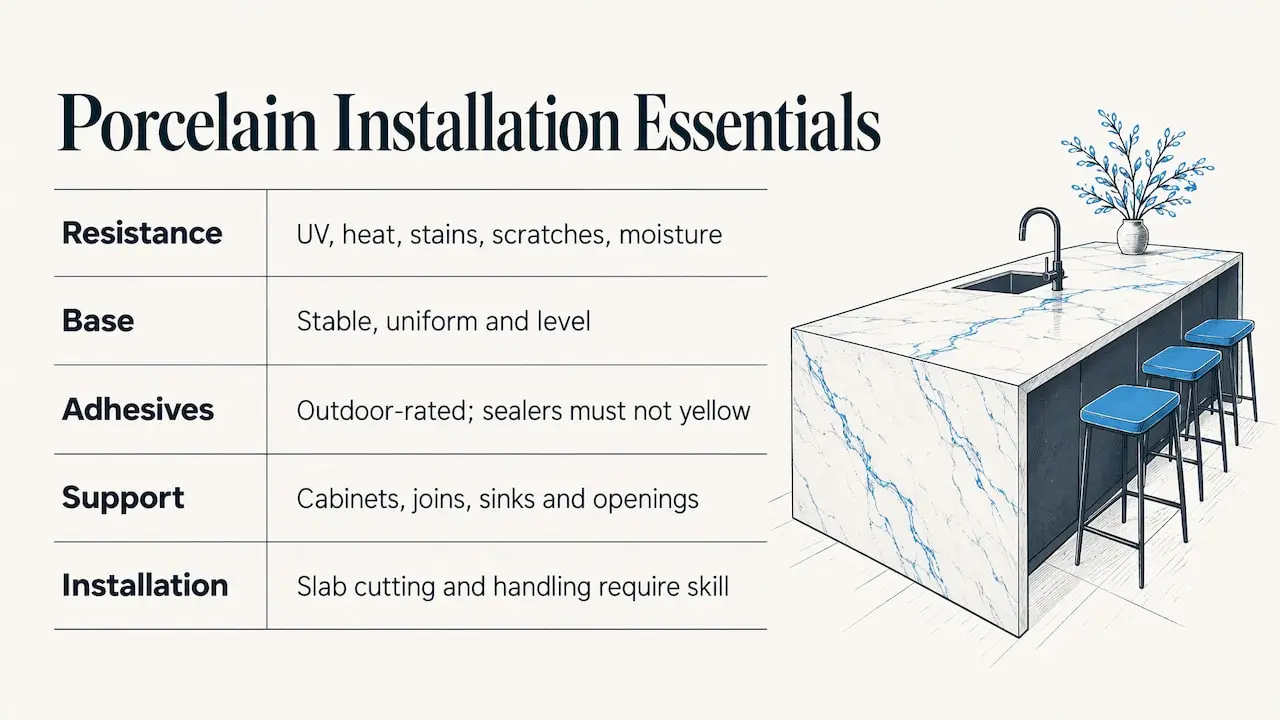
Porcelain is one of the best outdoor kitchen countertop materials for Florida homeowners seeking durability with minimal maintenance. Its resistance to UV exposure, stains and moisture makes it suitable for sunny patios, poolside kitchens and covered outdoor living areas. Homes & Gardens also identifies porcelain as a strong outdoor option, although fabrication requires specialized equipment and experience.
Proper installation is essential, particularly with large-format slabs. Stoneville’s porcelain fabrication and installation guide addresses substrate preparation, support and installation requirements. Countertops must be properly supported around sinks, grills and appliance openings to reduce the risk of cracking or damage.
Concrete: Custom Shapes, Regular Sealing
Concrete countertops offer flexibility for custom outdoor kitchen islands, curved bars and integrated seating areas. However, proper reinforcement and installation are essential because concrete can develop cracks. HGTV’s outdoor countertop guide discusses this drawback, while Consumer Reports explains how sealing affects countertop stain resistance and maintenance. In Florida’s heat and humidity, homeowners should use exterior-compatible sealers and protect coated surfaces from excessive heat.
Tile: Budget-Friendly With a Grout Catch
Tile offers a wide selection of colors, patterns and price points, making it an attractive option for budget-conscious outdoor kitchens. However, grout lines require regular cleaning and maintenance, particularly in Florida’s humid climate. Large-format tile reduces the number of grout joints, while proper waterproofing, exterior-rated installation materials and routine grout care help protect the countertop from moisture-related damage.
Stainless Steel: Hygienic, but Hot in the Sun
Stainless steel is nonporous, easy to clean and practical for covered outdoor kitchens. However, direct sunlight can make the surface extremely hot to touch, as discussed in Family Handyman’s outdoor countertop comparison. For coastal properties in Daytona Beach and Palm Coast, choose an appropriate corrosion-resistant grade, such as marine-grade stainless steel, and rinse salt deposits regularly to maintain the finish.
Why Engineered Quartz Is a Poor Fit for Direct Sun
Engineered quartz contains natural quartz particles combined with resin binders. Although Consumer Reports highlights its low-maintenance properties for indoor kitchens, prolonged outdoor UV exposure can affect the resin. HomeCostLab’s outdoor kitchen cost guide also identifies potential discoloration and deterioration as concerns for exterior applications.
Before choosing engineered quartz for a Florida outdoor kitchen, review the manufacturer’s written installation requirements and warranty coverage. Products intended only for indoor use should not be installed in exposed outdoor kitchens. Natural quartzite, porcelain and granite are generally more appropriate alternatives.
Countertop Comparison: Durability, Heat, Maintenance and Cost
Costs are relative tiers, because installed prices vary with slab, edge detail, cutouts and region. Published estimates differ widely, so get a written quote for your layout.
| Material | Durability outdoors | Heat resistance | Maintenance | Relative cost |
|---|---|---|---|---|
| Granite | High, naturally UV-stable | High | Seal as needed; avoid heavily veined slabs in full sun | Mid to high |
| Quartzite | High | High | Seal with an outdoor-rated sealer | Mid to high |
| Porcelain | Very high; resists UV, stains and moisture | High | Low; no sealing for the surface | Mid to high, plus specialist fabrication |
| Concrete | Good if reinforced and sealed | Fair when topically sealed | Regular resealing; watch for cracks | Low to mid |
| Tile | Good; grout is the weak point | High | Seal grout yearly and clean mildew | Lowest |
| Stainless steel | High; use marine grade on the coast | Heat-proof, but surface gets very hot in sun | Rinse and wipe; avoid abrasives | Mid to high |
| Engineered quartz | Not suited to direct sun | Moderate | Low indoors | Not recommended outdoors |
Installed countertop prices vary by material, slab thickness, fabrication, cutouts and local labor costs. For comparison, HomeCostLab’s 2026 outdoor kitchen cost guide estimates tile countertops at approximately $30 to $60 per square foot, concrete at $50 to $100 and granite at $60 to $120. These are general planning estimates rather than Agua Pools installation prices. Homeowners should also allow for unexpected expenses, as discussed in Crowley Exteriors’ exterior renovation budget guide.
Sealing and Care in Florida’s Climate
Sealing is the biggest ongoing task for stone, concrete and tile grout.
-
Test before you reseal. Iowa State University Extension suggests placing a few drops of water on the counter. If the water beads, the sealer is still working. If it soaks in and darkens the stone, seal it.
-
Choose an outdoor-rated sealer. Ask your fabricator which product suits your stone and how often to apply it, because slabs and exposure differ.
-
Clean gently. Use mild soap and water, and avoid acidic cleaners on natural stone.
-
Rinse salt. On the coast, rinse the surface regularly so salt does not build up.
-
Wipe food spills promptly. Porous surfaces can stain and harbor bacteria.
Installation Requirements That Protect Your Investment
The countertop is only as good as what sits under it. The Lapitec installation manual says outdoor slabs need a flat, level and structurally sound base, full support for masonry kitchens and exterior-suitable adhesives. It warns that uneven or inadequate support is a major cause of breakage.
Before you sign off on a design, check these items:
-
A reinforced, level substrate that suits the countertop weight
-
Support at sink, cooktop and grill cutouts
-
Exterior-rated adhesives and sealers
-
Overhangs that are not too long for unsupported slabs
-
Drainage and expansion joints that suit Florida rain and heat
-
Local permit and code requirements, confirmed with a licensed contractor
Ventilation also matters when you add a hood or enclosed grill. Our guide to outdoor kitchen ventilation for Florida patios and lanais covers it. For the surface beneath your feet, see outdoor kitchen flooring for Florida backyards.
How to Choose by Location and Exposure
-
Ocala and inland Marion County: Strong sun and heat favor porcelain or solid-color granite. Stainless works under cover.
-
Daytona Beach and Palm Coast: Salt air favors porcelain or marine-grade stainless, with regular rinsing.
-
St. Johns County and Jacksonville: Humidity and storms favor low-absorption surfaces and well-sealed grout lines.
-
Tallahassee: Occasional freezes make low water absorption important for tile and stone.
-
Screened lanai: Shade opens up stainless steel, and honed finishes show less glare.
The Agua Pools View on Outdoor Kitchen Countertops
We have built more than 1,000 pools, and the outdoor kitchens we design sit just feet from the water, in full Florida sun.
That is why we treat the countertop as part of the whole backyard, not a separate shopping decision. We start in our collaborative 3D design process, so you can see the surface beside your pool, deck and pergola before anything is built.
Our team handles the build from start to finish. That helps the substrate, cutouts and finishes get coordinated without handoffs between subcontractors.
Our advice is simple: pick the material for your exposure first, then pick the color. Pairing a durable surface with a clear maintenance plan is what keeps an outdoor kitchen looking good for years.
Plan Your Outdoor Kitchen With Agua Pools
We design and build outdoor kitchens, pergolas, fire features and screen enclosures alongside custom pools and spas for homeowners across North and Central Florida. You can preview the full layout in 3D, countertop included, and work with one in-house team from design to completion. Start with our custom outdoor kitchens page, or explore the full outdoor living services.
If you are planning a larger project, see how a backyard makeover with a pool comes together. We also serve homeowners through our Daytona Beach pool builder and Jacksonville pool builders pages.
Frequently Asked Questions About Outdoor Countertops
What is the best countertop for an outdoor kitchen in Florida?
Porcelain is our first recommendation because it resists UV, heat, stains and moisture with little upkeep. Granite is the best natural stone choice, preferably a solid-color or lightly veined slab. Either one needs a qualified fabricator and a level, well-supported base.
What is the cheapest outdoor kitchen countertop?
Tile is generally the lowest-cost option, and concrete often sits next. Grout sealing for tile and resealing for concrete add ongoing upkeep, so compare long-term care with the upfront price. Published cost ranges vary, so ask for a quote for your specific layout.
Can I use quartz countertops outside?
Indoor engineered quartz is generally not recommended for direct sun, because UV can discolor the resin binder. Natural quartzite is a different material and is a good outdoor option when sealed properly. Always read the manufacturer’s exterior-use and warranty terms.
What are good waterproof outdoor countertops?
Porcelain and stainless steel are the most water-resistant surfaces. Granite, quartzite and concrete resist moisture well when sealed and maintained. Tile is water-resistant, but its grout needs yearly sealing.