
The coolest pool deck options for Florida are light-colored, textured surfaces: cool deck coatings, light travertine and light-colored pavers. Dark, smooth surfaces in full sun feel the hottest. No surface has one guaranteed temperature, because color, texture, shade and the material itself all change how a deck feels under bare feet. The right pick depends on whether you are building a new pool, resurfacing an old slab or remodeling the whole backyard.
This guide compares the main choices on heat, grip, durability, upkeep and cost. It is written for homeowners in Ocala, Daytona Beach, Ormond Beach, Palm Coast, St. Augustine, Jacksonville and Tallahassee, where summer sun, humidity and daily storms all shape what a deck has to survive.
Quick Answers About Cool Deck Options
-
Textured acrylic cool deck coatings are among the coolest and most budget-friendly ways to resurface sound concrete.
-
Light travertine and light pavers are premium options that suit new builds and full remodels.
-
Color matters as much as material: white and light tones stay cooler than dark ones, and texture helps both comfort and grip.
-
Ask any installer about slip resistance, sealers and drainage, not only looks and price.
-
Fixing a cracked or failing slab comes first. A coating over an unsound base will not last.
What Makes a Pool Deck Hot Underfoot
A deck gets hot when it absorbs sunlight and retains heat. According to SUNDEK’s cool deck guide, surface temperature depends on the coating material, color, shade and texture. Light-colored acrylic coatings can absorb less heat than traditional gray concrete or dark stone, while textured finishes may feel more comfortable under bare feet by reducing direct surface contact.
Florida adds three complications:
-
Sun intensity and long season. Decks bake from late spring into fall, and a deck that is comfortable in March can be unpleasant in August.
-
Humidity and rain. A surface is wet, damp or algae-prone much of the year, so grip matters as much as heat.
-
Pool water chemistry. Chlorine or salt splash, plus constant wet-dry cycles, wear on sealers and coatings over time.
Because of all this, we avoid quoting a single “degrees cooler” figure. Numbers you will see online vary by product, color and test conditions. Put your bare hand on installer sample boards left in the sun for an hour. That tells you more than a brochure.
Cool Deck Coatings
A cool deck coating is a textured cement-based or acrylic overlay applied over existing concrete. It gives an older slab a refreshed appearance, a more comfortable walking surface and improved traction when properly installed. As explained in SUNDEK’s pool deck resurfacing guide, resurfacing can be a practical alternative to removing and replacing structurally sound concrete, with multiple colors, textures and patterns available.
Heat: Light-colored acrylic coatings are among the cooler options for Florida pool decks. Darker colors absorb more sunlight and may reduce the cooling benefit.
Slip resistance: Textured coatings can improve traction, but performance depends on the complete coating system, sealer and maintenance. Ask how the finished surface performs when wet.
Durability: Coatings can wear over time, particularly around steps, edges and heavily used areas. Proper preparation is essential. The SUNDEK SUNPLAY system booklet provides manufacturer guidance on surface preparation, installation and ongoing maintenance. Coatings should only be applied to concrete that meets the selected product’s requirements.
Maintenance: Regular rinsing, cleaning and periodic resealing help preserve the finish. Follow the manufacturer’s recommendations for maintenance and future recoating.
Cost: Cool deck coatings are generally less expensive than replacing an entire concrete deck, although pricing depends on the coating system, surface preparation, repairs and local labor. Published homeowner estimates place some coatings around $3 to $7 per square foot installed, but Florida homeowners should obtain written estimates for their specific projects.
One caution: Avoid using ordinary house paint as a substitute for a properly specified pool deck coating. Products not designed for exterior concrete and wet walking surfaces may peel, wear prematurely or create traction problems.
Epoxy and Other Non-Slip Systems
Some manufacturers offer specialized exterior epoxy systems for restoring concrete pool decks. For example, SureCrete’s RESIST exterior sand epoxy system is designed for concrete restoration and includes pool decks among its listed applications. These systems use specialized aggregates to provide a textured, slip-resistant surface.
However, not every epoxy coating is appropriate for Florida’s intense sunlight and wet pool environments. Before choosing an exterior coating system, confirm manufacturer approval for the intended application and ask about UV exposure, surface temperature, traction, maintenance and compatibility with existing concrete.
Travertine
Travertine is a natural stone, often chosen for pool decks because light tones look clean and feel more comfortable than dark stone. Its surface is naturally somewhat porous and textured, especially in tumbled or honed finishes.
Heat: light-colored travertine is a popular choice for decks that see strong sun. Darker stone and polished finishes are the ones to be wary of.
Slip resistance: honed or tumbled finishes generally give better wet grip than polished stone. Never choose a polished finish for a wet area.
Durability: strong when installed on a proper base. Salt systems and some chemical splash can affect natural stone over time, so sealing and upkeep are part of owning it.
Maintenance: periodic sealing, plus cleaning to keep algae and stains from settling into the pores.
Cost: premium. It sits toward the upper end of the pool-deck range, and the stone, base work and labor all add up. If you are weighing it against other natural stone, we compare the two in our guide to marble versus travertine for pool decks.
Pavers
Pavers are individual concrete, clay or stone units set on a compacted base with joints between them. They are one of the most flexible options for shape, color and pattern, and they suit curves and large patios well.
Heat: depends heavily on color and material. Light pavers stay more comfortable than dark ones. Joints and texture can help, but a dark paver in July afternoon sun will still be hot.
Slip resistance: many paver surfaces have a natural texture. Check the specific product’s finish and ask how it behaves wet.
Durability: good, if the installation is good. A paver deck depends on its base, drainage, joint system and workmanship. Heavy Florida rain makes drainage and base compaction especially important, and poor base work shows up as settling or shifting.
Maintenance: joints may need re-sanding or sealing, and weeds or algae can show up in them. The upside is repair: individual units can be lifted and replaced, unlike a cracked slab.
Cost: mid to upper range, with installation quality driving price as much as the product.
Cool Deck vs. Pavers
This is one of the most common decisions homeowners face when choosing pool deck materials in Florida. Cool deck coatings resurface existing concrete, while pavers provide a separate deck surface that can be installed on a properly prepared base or, in suitable applications, over existing concrete. The better option depends on the condition of your current deck, available budget, drainage requirements and preferred appearance.
Choose a coating when:
-
your existing concrete is structurally sound
-
you want the lowest-disruption, lower-cost refresh
-
your priority is comfort underfoot at a reasonable budget
Choose pavers when:
-
you are building a new pool or expanding the deck
-
the slab is cracked, heaving or poorly drained
-
you want a high-end look with patterns, borders or curves
-
you want the ability to repair sections later
There is no universal winner. A light cool deck coating and a light paver can both feel comfortable. The wrong choice is a dark color of either one.
Textured and Stamped Concrete
Poured concrete is a popular choice for Florida pool decks because of its durability, versatility and relatively affordable installation cost. Broom-finished or lightly textured concrete provides traction around wet areas, while stamped concrete offers decorative patterns that resemble stone, brick or pavers. However, deeper stamped textures may collect dirt and algae, requiring additional maintenance.
Heat: Traditional gray concrete can become hot in direct sunlight. Light-colored integral pigments, reflective coatings and appropriately selected finishes can help improve comfort under bare feet. For homeowners working within a budget, choosing light-colored concrete for the main deck and reserving premium materials for coping, borders or accent areas can create an attractive outdoor space without significantly increasing costs.
Slip resistance: Broom-finished and lightly textured surfaces generally provide better traction than smooth concrete. Avoid polished or smooth-troweled finishes around swimming pools, and confirm that any sealer maintains appropriate wet slip resistance.
Durability: Properly installed concrete is durable but can develop cracks from ground movement, settling and temperature changes. A well-prepared base, appropriate control joints and proper drainage help reduce these risks.
Maintenance: Regular cleaning helps prevent algae, stains and surface buildup. Resealing may be necessary depending on the finish and manufacturer recommendations.
Cost: Textured concrete is generally one of the more affordable options for new pool decks. Stamped patterns, decorative finishes and specialized coatings can increase installation costs, so compare materials and labor when planning your budget.
Other Heat-Reflective and Specialty Surfaces
A few other surfaces come up in conversations:
-
Poured-in-place rubber (EPDM). Soft and cushioned, sometimes marketed for hot climates. It is more common for play areas and splash zones than for whole Florida pool decks.
-
Composite decking. Suited to raised decks, low maintenance, but Family Handyman notes it can become uncomfortably hot underfoot. Priced at $15 to $25 per square foot in the same guide, it is the most expensive option listed and not the cool choice.
-
Loose-fill surfaces. Decomposed granite and gravel can work for surrounding patios, pathways and landscaped areas, but they are generally less practical immediately beside a swimming pool. Loose particles can enter the water, create maintenance problems and make barefoot walking uncomfortable.
Comparison at a Glance
Ratings below are general relative comparisons for light colors in Florida sun, not measured temperatures. Cost ranges for coatings and composite come from the Family Handyman guide cited above.
| Surface | Heat comfort (light color) | Wet grip | Durability | Upkeep | Cost |
|---|---|---|---|---|---|
| Cool deck coating | Very good | Good with proper sealer | Moderate, refresh over time | Rinse, periodic reseal | $3 to $7 per sq. ft. |
| Travertine (honed or tumbled) | Good to very good | Good | High with a sound base | Seal, clean | Premium |
| Pavers | Good | Good, varies by product | High with a good base | Joints, sealing | Mid to upper |
| Textured concrete | Fair (better if light) | Good | High, can crack | Seal, clean | Lowest for new |
| Epoxy non-slip system | Varies by color | Designed non-slip | Good on sound slabs | Low to moderate | Varies |
| Composite decking | Can run hot | Varies | Good | Low | $15 to $25 per sq. ft. |
How Florida Conditions Change the Decision
A surface that performs well in a dry climate can disappoint in Florida. Here is what we weigh when we plan a deck.
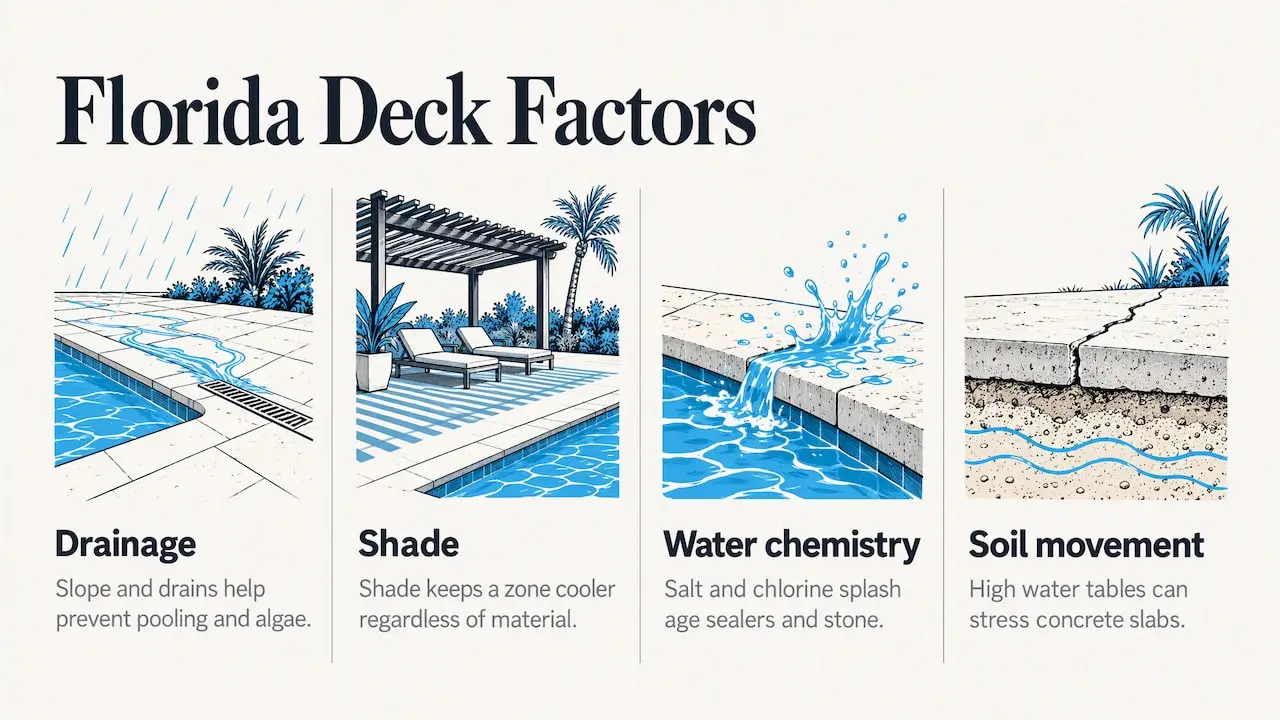
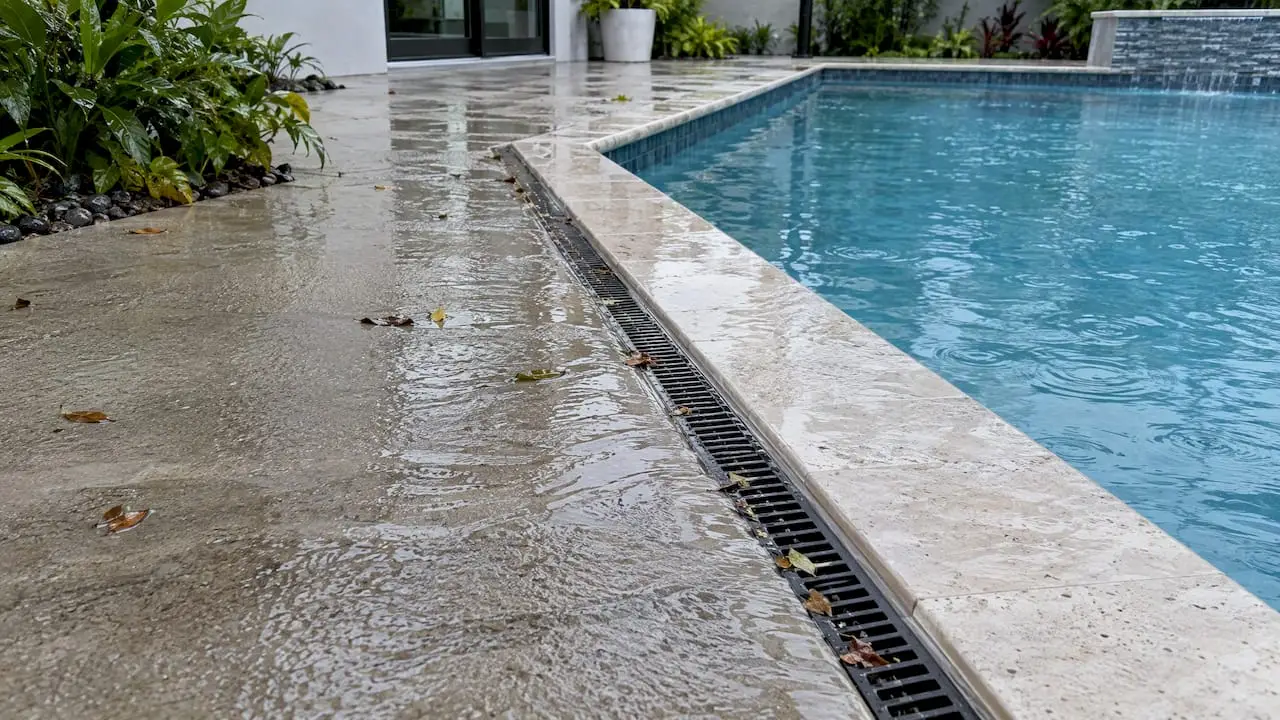
Rain and drainage. Afternoon storms mean the deck needs to shed water quickly. Slope, drains and base preparation matter as much as the surface. Pooling water breeds algae, which makes any surface slippery.
Sun exposure by area. Decks facing west or lacking tree shade take the worst of it. If part of your deck is shaded by a screen enclosure, pergola or the house, that zone will feel cooler regardless of material. Combining a light surface with shade structures is often the most effective approach. See our outdoor living options for enclosures and pergolas.
Water chemistry. Salt systems and chlorine splash age sealers and some stones faster. Ask whichever installer you use how their product handles your type of sanitizing.
Soil movement. Sandy north Florida soils and high water tables can stress slabs. A cracked deck should be repaired or replaced, not simply covered.
Regional notes. In Jacksonville, Duval County and St. Johns County, coastal moisture and salt air add to wear. In Ocala and Marion County, inland heat is relentless. In Tallahassee and Leon County, the longer, cooler winter and heavy tree cover mean leaf stains and algae are as much a concern as heat. Volusia and Flagler counties, including Daytona Beach, Ormond Beach and Palm Coast, see a mix of coastal and inland conditions.
Slip-Resistant Pool Deck Surfaces
A cool deck that is slippery is a bad deck. Slip resistance comes from texture, the sealer on top and how clean the surface stays. A few practical rules:
-
Ask to see the finish wet, not only dry. A sample board and a water bottle will do.
-
Avoid polished stone and smooth troweled concrete near the water.
-
Ask which sealer or topcoat goes on and how often it needs renewal.
-
Keep the surface free of algae with regular cleaning, since slick buildup defeats any texture.
-
Think about who uses the deck: small children, older family members and guests in wet bare feet.
Do not substitute household paint. As noted above, it can create a slip hazard on concrete walking surfaces.
Our Perspective on Choosing a Deck
We have built more than 1,000 pools, and the deck is where homeowners most often regret a decision made on looks alone. Our advice is simple. Pick the lightest color you like, insist on texture, and confirm the base is right before spending on the surface. A beautiful surface over a failing slab or poor drainage is money wasted.
For new pools, we usually design the deck as part of the whole project in 3D, so you can see color, material and shade together before we pour anything. Because our in-house team handles the work rather than passing it among subcontractors, base preparation and finishing stay in one set of hands. For existing pools, we start with an honest look at the slab. Sound concrete can often be refreshed; failing concrete should be addressed first.
— The Agua Pools Team
Plan Your Deck With Agua Pools
If you are building a new pool or updating an old one, we can help you choose the deck surface, color and layout that fit your yard and sun exposure. Our team designs and builds custom pools, spas and outdoor living spaces across North and Central Florida. Explore custom pool design, new pool construction or pool remodeling to see how we work, or browse our project gallery for deck ideas.
If your deck is part of a bigger plan, our pool construction timeline explains when decking happens in the build. Planning an outdoor kitchen next to the pool? Flooring there has its own demands, covered in our guide to outdoor kitchen flooring for Florida backyards.
Practical Recommendations
-
Tight budget, sound slab: a light cool deck coating with a textured finish.
-
New pool, long-term outlook: light pavers or honed travertine on a properly compacted, well-drained base.
-
Cracked or sunken deck: repair or replace the base first, then choose a surface.
-
Full sun, no shade: go as light as you can, and add a pergola or screen enclosure over lounge areas.
-
Families with young children: prioritize grip and cleanability, then heat.
-
Salt system: confirm the sealer and stone suit it before you commit.
Before signing, ask each installer for written details on surface preparation, the sealer or topcoat, warranty terms and how repairs are handled.
Cool Deck Questions Homeowners Ask
What Is the Coolest Pool Deck Material?
Textured acrylic cool deck coatings in light colors are among the coolest choices, since acrylic absorbs less heat than gray concrete and dark stone. Light travertine and light pavers also perform well. Color, shade and texture often matter as much as the material itself.
Is Cool Decking Slippery When Wet?
Textured cool deck coatings are designed to improve slip resistance, but no pool deck surface is completely slip-proof. Traction depends on the coating system, surface texture, sealer and maintenance. Ask to test a wet sample before installation, and keep the surface clean to prevent slippery algae buildup.
Can You Put a Cool Deck Over Existing Concrete?
Yes, if the concrete is sound. The slab should be clean, dry and properly profiled, and new concrete needs to cure first. Cracked, heaving or poorly drained slabs should be repaired before coating.
Is a Cool Deck Better Than Pavers?
It depends on your situation. A coating is usually the lower-cost, lower-disruption way to refresh a good slab, while pavers suit new builds, full remodels and homeowners who want repairable, patterned surfaces.
How Much Does a Cool Deck Cost?
One 2025 homeowner guide lists cool deck coatings at about $3 to $7 per square foot installed. Your actual price depends on slab condition, repairs, size and local labor, so request written quotes.
Ready for a Cooler Backyard in Florida?
Whether you are in Ocala or Marion County, Daytona Beach, Ormond Beach or Palm Coast in Volusia and Flagler counties, St. Augustine or St. Johns County, Jacksonville and Duval County, or Tallahassee and Leon County, Agua Pools can design a deck that stays comfortable under your feet. See our Daytona Beach pool builder page or our Jacksonville pool builders page, then contact us at Agua Pools to start your 3D design.