
A pool mosaic is a pattern or picture built from small tiles, set in the pool shell, at the waterline, on steps or on a spa wall. For Florida pools, glass and porcelain are the safest choices for anything fully submerged, and ceramic works best on walls, spa faces and decorative accents. The best-looking designs keep one or two strong features, such as a waterline band, a floor medallion or step markers, and leave the rest of the pool calm.
Below you will find design ideas, a material comparison, notes on slip resistance, installation, upkeep and cost, and a few practical rules we use when homeowners in North and Central Florida plan a mosaic.
Quick Answers to Pool Mosaic Ideas for Florida Pools
-
Glass and porcelain mosaics are the best fit for submerged areas. Tile made for submerged installations typically has very low water absorption, which is what Florida sun, chemicals and year-round use demand.
-
Ceramic mosaics suit waterlines, spa walls and accents better than high-traffic floors.
-
Concentrate a bold pattern in one or two places instead of covering the whole pool.
-
Mosaic price depends on material, size, detail and installation labor, so ask for an itemized quote rather than a per-square-foot guess.
-
Plan the mosaic at the design stage: it goes in before the final finish so it sits flush.
Pool Mosaic Design Ideas Worth Considering
Most mosaic ideas fall into a handful of families. Pick the one that fits your home and your yard, not the one that looks best in a catalog photo.
Classic and Quiet Options
Small square tiles in solid or blended colors are among the most versatile pool mosaic ideas for Florida backyards. Classic 1×1 and 2×2 mosaics create a clean, timeless appearance, while penny-round tiles offer a softer, more decorative look. A waterline mosaic featuring two or three shades of blue, aqua or gray adds visual interest without overwhelming the pool design. These understated combinations work particularly well with modern homes in Ocala and Palm Coast.
Geometric and Mediterranean Patterns
Geometric pool mosaic designs include chevrons, hexagons, fish-scale tiles and Moroccan-inspired patterns. These decorative styles work especially well along waterlines, raised spa walls and accent features. Mediterranean and Spanish-inspired mosaics complement the stucco exteriors and tile roofs found throughout St. Augustine and Jacksonville. For a balanced design, concentrate bold patterns in one or two areas while keeping the surrounding pool finishes simple.
Pictorial Designs
Pictorial mosaics are the ones people picture when they search for custom pool mosaics. Common themes include:
-
Sea life such as dolphins, turtles, koi and rays
-
Tropical underwater scenes and ocean panoramas
-
Floor medallions, sun medallions and compass roses
-
Waves and tide patterns with flowing curves
-
Family crests, initials or a house number
-
Starry-night designs for pools used in the evening
One practical point: simpler shapes with wider lines read better from the deck and through moving water than fine detail does. A turtle with a bold outline will look good for years. A photographic scene may look muddy once water ripples across it.
Step Markers and Depth Markers
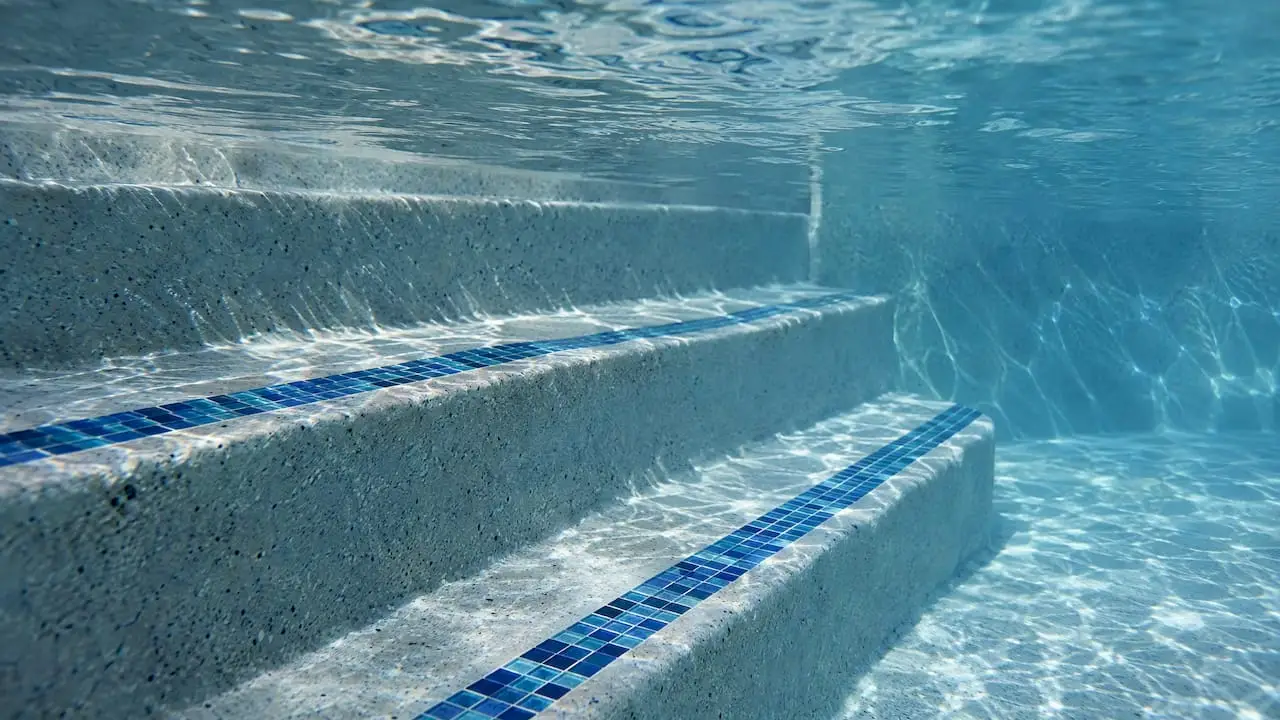
Mosaic inserts on steps and at depth changes are the most useful decorative tile in a pool, because they add a safety cue and a design moment at once. They are also a small, affordable way to try a mosaic before committing to a large floor piece.
Color Palettes for Florida
Blue, aqua, teal and blue-gray are among the most popular colors for pool mosaic designs in Florida. Lighter shades create a bright, tropical appearance, while deeper blues add contrast and visual depth. White, sandy neutrals and soft gray tones complement natural stone coping, travertine decking and Florida’s abundant sunlight. For a cohesive backyard design, coordinate your pool mosaic tiles with the pool finish, waterline, coping and surrounding deck materials. If you are comparing natural stone options, our guide to marble versus travertine for pool decks can help you select complementary materials.
Glass, Porcelain, and Ceramic Mosaics Compared
The material decides how the mosaic looks in the water, how it handles chemicals and how long it lasts. Here is a short comparison for Florida pools.
| Material | Best Use | Strengths | Watch Out For |
|---|---|---|---|
| Glass mosaic | Waterlines, walls, floors, spa spillways | Very low absorption, depth and shimmer in sunlight | Needs the right setting material and grout; iridescent finishes need gentle cleaning |
| Porcelain mosaic | Floors, steps, walls, waterlines | Durable, chemical-resistant, low absorption, stone-look options | Less sparkle than glass; confirm the product is rated for submerged use |
| Ceramic mosaic | Waterline bands, spa walls, accents | Wide glaze and color range, hand-finished looks | Generally less suited to high-traffic floors; acidic cleaners can etch glazes |
| Natural stone mosaic | Decks, coping, dry features | Natural variation | Do not assume it suits submerged use; check the specific stone |
The technical guidance behind this table comes from tile-setting material manufacturers. LATICRETE’s pool design manual recommends choosing porcelain, glass or other tile specifically manufactured for submerged installations. It also explains that natural stone suitability depends on the particular stone, so homeowners should confirm compatibility with the supplier before using natural stone below the waterline.
Which Materials Work Best Under Water in Florida
For floors and anything below the waterline, we steer homeowners to glass or porcelain. Florida pools run nearly year-round, see intense UV, and are often sanitized with salt systems or chlorine, so low-absorption tile is the sensible choice. Ceramic earns its place on the waterline band, on spa walls and in accents, where it adds color and hand-crafted character without carrying heavy wear. Whatever you choose, the product itself should be specified for pool use. Not every tile is made for submerged conditions, and a good builder confirms that before ordering.
Waterline Tile and Decorative Accents
The waterline is where a pool shows its age first. Sunscreen, minerals and chemistry leave a ring there, so tile is both decoration and protection. A band of mosaic at the waterline gives you an easy-to-clean surface and a clear visual edge.
Accents that pair well with a waterline band include:
-
Spa spillways and raised walls, where iridescent glass catches changing light
-
Baja shelf edges, which benefit from a contrasting trim line
-
Infinity edges and water features, where tile frames the sheet of water
-
Fire features and outdoor kitchens, where a repeat of the pool’s accent color ties the yard together
If you are planning a spa or water feature, our spas and water features team can integrate the tile with the structure from the start. For a fire bowl or fire wall on the same patio, see our fire features page.
Custom Pool Mosaics: Size, Placement, and Detail
A custom mosaic can be scaled to your pool’s exact shape or designed from scratch. A few decisions shape the result.
-
Where it goes. LATICRETE’s pool design manual notes that tile can be installed throughout the shell, on the floor only, on walls only or at the waterline, depending on the look you want.
-
How big. A floor medallion sized to the deep end reads from the deck. Too small and it disappears; too large and it fights the pool’s shape.
-
How detailed. Bold shapes and fewer color transitions survive distance and ripples.
-
How it is made. Hand-assembled mosaics offer artisanal variation, while machine-produced pieces offer more uniformity. Neither is wrong; they are different looks.
-
How it fits the pool finish. Tell your builder early whether you want plaster, aggregate or full tile, since that affects when the mosaic goes in.
This is where a 3D design preview helps. Seeing the mosaic placed in a rendering of your actual pool, with your deck and your light, is far more useful than judging a small sample on a table.
Slip Resistance and Safety
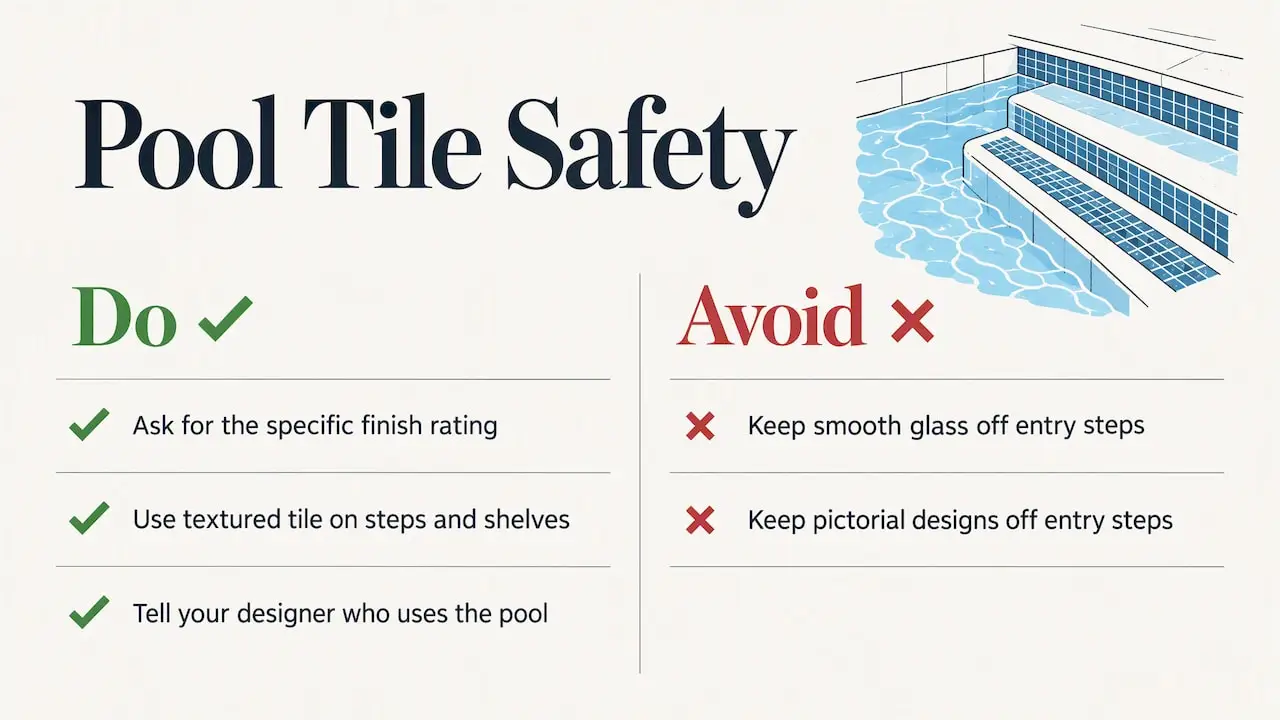
A mosaic that is beautiful but slippery is a bad trade. Smooth glazed tile is fine on a vertical wall, but steps, benches, sun shelves and entries need a surface that grips. Glass and porcelain tile are made with slip-resistant finishes in some lines, so ask for the finish rating of the specific product and use textured options on steps and shelves. Keep pictorial designs and smooth glass away from the main entry steps, and use mosaic depth markers as a visual cue instead. If young children or older adults use the pool, tell your designer so the surfaces are chosen with them in mind.
How Mosaic Tile Is Installed
Installation matters as much as the tile. A great mosaic set badly will fail.
-
Surface preparation. The shell must be sound, stable and clean. In a remodel, that can mean removing old plaster or tile and cleaning the concrete or gunite before anything is set.
-
Setting materials. Use mortar and adhesive specified for the tile type, and grout suited to glass if you are using glass. Epoxy grout is a common choice in pools because it is dense and stain-resistant.
-
Movement joints. Pools expand and contract with temperature and water load, so movement joints are placed according to industry standards, not skipped for a cleaner look.
-
Timing. A floor or wall mosaic is typically installed before the final plaster or aggregate finish, so it can sit flush with the surrounding surface. That is why the choice belongs in the design phase, not after the shell is done.
-
Standards. Look for tile that meets the relevant ANSI A137 standard for the product category, and ask your builder which standard applies to your tile.
Proper surface preparation, waterproofing where required, compatible setting materials and movement joints are essential to a lasting pool mosaic tile installation. The LATICRETE pool design manual provides technical guidance for selecting and installing tile in swimming pools and other submerged applications.
Keeping Mosaics Clean in a Florida Pool
Florida’s hard water and warm temperatures mean calcium scale is the most common tile problem. A few habits keep mosaics looking new:
-
Brush the waterline regularly with a soft nylon brush or pad. Avoid wire brushes and pumice, which scratch glass and glaze.
-
Balance your water. Scale forms faster when calcium hardness and pH drift out of range, so steady chemistry protects tile as much as scrubbing does.
-
Treat scale early. Light deposits are easier to remove than thick ones.
-
Be careful with acid. Strong acids can damage glazes and iridescent glass. Leave heavy scale removal to a pool professional who knows your tile.
-
Rinse and wipe grout haze during installation using a cleaner approved for your tile, never a harsh substitute.
If you want less cleaning work overall, pool automation helps keep chemistry and circulation consistent, which protects the tile.
What Mosaics Cost and What Drives the Price
We do not publish mosaic prices, and any single per-square-foot figure you read online should be treated with caution because projects differ so much. What actually moves the price:
-
Material: glass, porcelain and ceramic vary widely by line and finish
-
Size and coverage: a step marker is a different project from a full floor medallion
-
Complexity: custom artwork takes longer to design and assemble than stock patterns
-
Surface condition: a remodel may need demolition or repair before tile goes on
-
Labor: setting tiny tiles accurately takes skill and time
Ask for an itemized quote that separates tile, labor, surface preparation and any custom design fee. That way you can compare options honestly and decide where to spend.
Our Perspective on Mosaics in Florida Pools
We have built more than 1,000 pools, and the mosaic decisions that homeowners are happiest with share a pattern. They chose one focal point, they approved it in a 3D preview, and they let the same in-house team handle design, tile and finish, so nothing was lost between trades.
Our advice is to resist the urge to decorate every surface. A pool with a tasteful waterline, a single medallion or a set of step markers looks custom and intentional. A pool with five competing patterns looks busy, and water movement makes it busier. Choose glass or porcelain below the waterline, use ceramic where it will not be walked on, and decide on the mosaic before the shell is finished.
Communication is the other half. A mosaic is small, but it is the part of the pool your family and guests will stare at most, so we show you the design, the color and the placement before anything is ordered.
— The Agua Pools Team
Plan Your Mosaic With Our Design Team
Agua Pools designs and builds custom in-ground pools, spas and outdoor living spaces across North and Central Florida. Our collaborative 3D process lets you see a mosaic in your own pool before construction, and one in-house team keeps the schedule moving without subcontractor delays.

If you are starting from scratch, explore custom pool design or browse our Florida pool gallery for finished work. If you want to see tile in person, shop local pool and waterline tile in Ocala, Daytona Beach, St. Johns or Tallahassee. Building something smaller? Our small backyard pool ideas show how a mosaic accent can make a plunge or cocktail pool feel special.
Practical Recommendations
-
Start with the waterline. It is the highest-impact, lowest-risk place for a mosaic.
-
Choose glass or porcelain for submerged areas. Use ceramic for walls and accents.
-
Limit yourself to one or two features. Add step markers if you want a safety cue.
-
Match the style to the house. Mediterranean patterns for stucco homes, clean blends for modern ones, tropical or sea-life scenes for relaxed coastal yards.
-
Ask for the slip rating of any tile used on steps or shelves.
-
Decide early. Mosaics go in before the final finish, so choose during design.
-
Get an itemized quote. Separate tile, labor, prep and design.
Pool Mosaic FAQs
What Is the Best Mosaic Tile for a Swimming Pool?
Glass and porcelain are the best choices for submerged areas because they are made with very low water absorption. Ceramic works well on waterlines, spa walls and decorative accents. Whatever you pick, confirm the specific product is rated for pool use.
Can I Add a Mosaic to an Existing Pool?
Yes, usually during a remodel or resurfacing. The old finish may need to be removed so the mosaic can sit flush with the new surface, so it is best done when the pool is already being renovated. Our team serves homeowners in Marion, Volusia, Flagler, St. Johns, Duval and Leon counties.
Are Pool Mosaics Slippery?
Smooth tile can be, especially on steps and shelves. Choose textured or slip-resistant finishes for walking surfaces and keep smooth glass or pictorial pieces on walls and the pool floor. Ask your builder for the finish rating of each tile.
How Do I Keep Pool Mosaics From Staining?
Keep water chemistry balanced, brush the waterline regularly with a nylon brush and treat calcium scale early. Avoid harsh acids and wire brushes unless a pool professional recommends them for your tile.
How Much Does a Custom Pool Mosaic Cost?
It depends on material, size, design complexity, surface preparation and labor. A small step marker and a large floor medallion are very different projects, so request an itemized quote.
Talk to Agua Pools in Your Part of Florida
Whether you live in Ocala, Ormond Beach, Daytona Beach, Palm Coast, St. Augustine, Jacksonville or Tallahassee, we can help you choose the right mosaic and build it into your pool. Visit our Ocala pool showroom or Tallahassee design center, or ask about a Jacksonville pool builder consultation and a Daytona Beach pool builder visit to start your 3D design.