
For most Florida homeowners, 20 mm porcelain pavers are the best outdoor kitchen flooring. They have very low water absorption, they resist grease and food stains, and they come in textured, slip-resistant finishes that hold up to rain, humidity and summer sun. Travertine is the best natural-stone choice, and sealed, textured concrete is the best budget choice. Brick and unsealed natural stone are the hardest to keep clean under a grill. Below, we compare all five and cover drainage, permits and layout.
Quick Overview
-
Best overall: porcelain pavers (20 mm) with a textured, slip-resistant finish.
-
Best natural stone: travertine, sealed and chosen in a lighter tone, which suits the look of a pool deck.
-
Best on a budget: broom-finished or stamped concrete, sealed regularly.
-
Skip under the grill: porous stone such as limestone or unsealed slate, and brick where grease will land.
-
Whatever you pick: grip rating and drainage matter more than the material name, so plan the slope before the finish.
Why the Floor Matters More Outdoors
An outdoor kitchen floor must support grills, countertops, and appliances while withstanding Florida’s rain, humidity, intense sunlight, and cooking spills. Porous materials such as limestone and unsealed slate can absorb grease and oils, making stains difficult to remove. Dense porcelain pavers offer better stain resistance and are generally easier to clean.
A material that works well around a swimming pool may not be the best choice beneath an outdoor kitchen. Along with slip resistance and heat retention, kitchen flooring must withstand grease, food spills, and frequent cleaning.
Outdoor Kitchen Flooring Compared
The table rates each material for a North or Central Florida backyard. Cost is a relative installed ranking, because final numbers depend on the site, access and layout. We quote each project in writing.
| Material | Relative Cost | Durability | Slip Resistance | Heat Underfoot | Maintenance |
|---|---|---|---|---|---|
| Porcelain pavers (20 mm) | High | Excellent: very low water absorption, resists stains | High with textured or R11-rated finishes | Moderate; lighter colors stay cooler | Very low: wash with mild soap |
| Travertine | Medium to high | Good if sealed; can pit or etch | Good when honed or tumbled | Cool; among the best in full sun | Moderate: periodic sealing, grease needs prompt cleanup |
| Natural stone (flagstone, limestone, slate) | Medium to high | Varies; porous types stain | Varies by cut and finish | Dark slate gets hot | High if porous, with frequent sealing |
| Poured concrete | Low | Good base; can crack | Good with broom or stamped texture | Warm to hot, especially in dark colors | Moderate: seal regularly, repair cracks |
| Brick pavers | Medium | Good, but joints shift and weeds can root | Moderate; can get slick with algae | Warm to hot | Moderate to high: joint sand, algae, stains |
Porcelain Pavers: The Pick for Most Florida Kitchens
Porcelain pavers designed for exterior use are available in approximately 20 mm thicknesses and offer excellent moisture and stain resistance. Their dense surface makes them particularly practical for outdoor cooking areas where grease, food, and beverages may spill. Choose a textured finish rated for exterior wet conditions and verify the manufacturer’s specifications before installation.
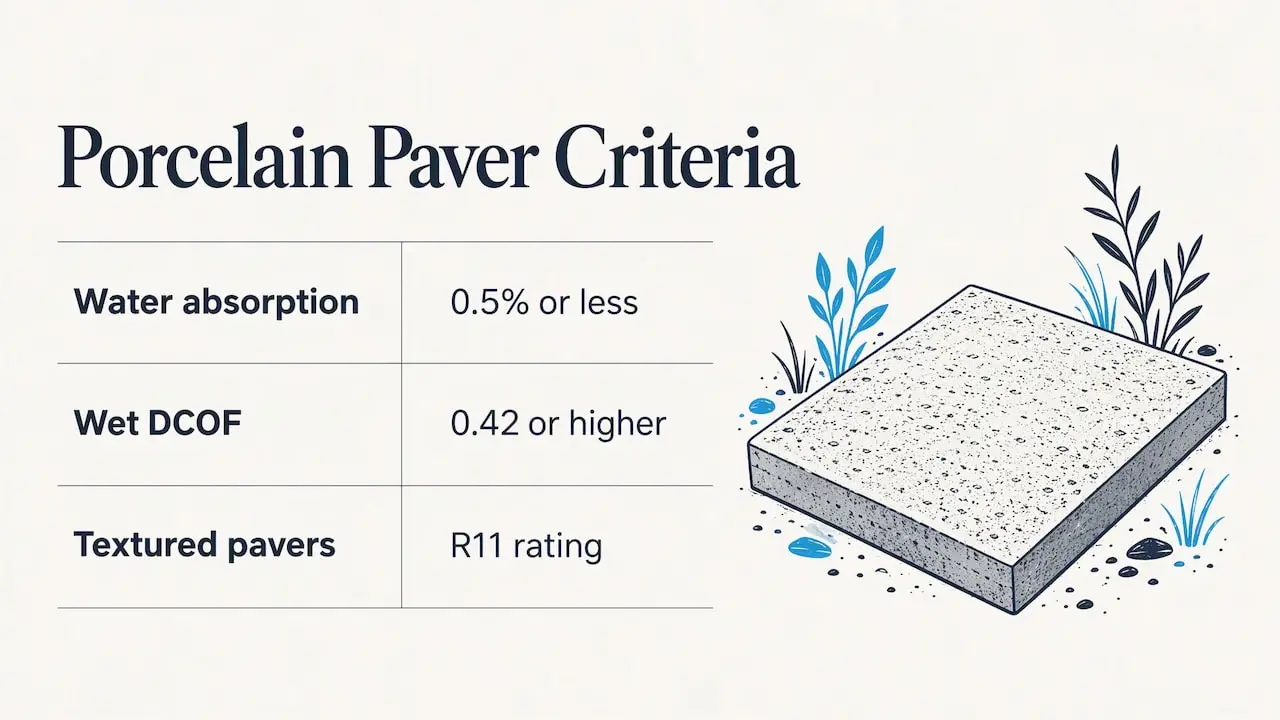
Florida’s humidity and frequent rainfall make moisture resistance especially important. Properly installed porcelain pavers are generally easier to maintain than porous natural stone, although regular cleaning is still necessary to prevent slippery buildup.
Installation Matters as Much as the Tile
Proper installation is essential for outdoor porcelain flooring. Depending on the product and site conditions, porcelain pavers may be installed over a prepared aggregate base, on a suitable concrete surface, or using another manufacturer-approved system. Installation requirements vary by paver thickness, format, and intended application.
Before installation, ask your contractor:
-
Installation method: Is the selected paver approved for the proposed base and installation system?
-
Drainage: How will the installation prevent standing water beneath or around the flooring?
-
Movement and spacing: What joint spacing and movement provisions does the manufacturer require?
-
Slip resistance: Is the exact product rated for exterior wet areas and suitable for an outdoor cooking environment?
Following the manufacturer’s installation requirements helps prevent shifting, cracking, drainage problems, and premature flooring failure.
Travertine: Natural Stone That Stays Cooler
Travertine is the stone we see most often around Florida pools, and it works well beside a kitchen when it is sealed and cared for. Its pale tones and textured surface stay comfortable underfoot in full sun. The tradeoff is that it is porous. Grease, red wine and acidic spills can leave marks or etch the surface, so it needs sealing and quick cleanup near the grill.
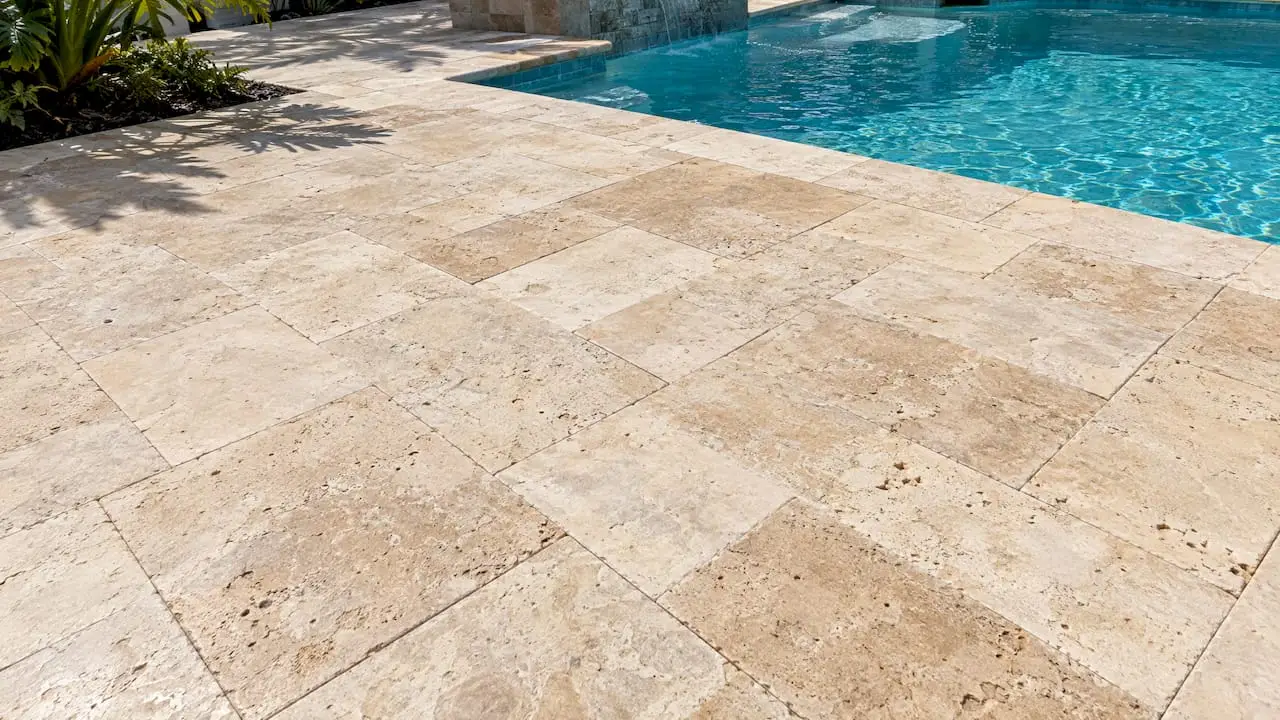
A smart compromise is using travertine across the lounge and pool deck and porcelain only under the cooking zone. If you are weighing stones for the deck itself, our guide to marble versus travertine for pool decks explains the differences.
Natural Stone, Concrete and Brick: Where They Fit
Flagstone, Limestone and Slate
Natural stone offers distinctive colors and textures, but maintenance requirements vary by material and finish. Porous limestone and unsealed slate may absorb grease, oils, and food spills, making them less practical directly beneath a grill. These materials can work well for surrounding patios, pathways, and seating areas when properly selected and maintained.
Poured and Stamped Concrete
Concrete is the most affordable permanent surface and handles heavy islands well. It does crack, and it needs resealing. In a cooking area, choose a broom finish or a textured stamped pattern so the surface keeps its grip when wet. Be wary of painted or smooth coatings, which can bubble, chip and turn slick. Concrete suits a budget-conscious build, but it will not match the finish of porcelain or stone.
Brick Pavers
Brick has a classic look and is easy to repair one piece at a time. In Florida’s damp climate, though, the joints collect algae, weeds and spilled grease. Over time the sand shifts and the surface can settle unevenly, which is a problem under a heavy island. We recommend brick for accents and borders, not for the cooking floor.
Planning for Florida Weather
From Tallahassee to Daytona Beach, outdoor kitchen floors face the same stresses: daily humidity, summer downpours, intense UV and hurricane-season storms. A few rules follow from that.
-
Pick lighter tones. Dark surfaces absorb heat and can be uncomfortable barefoot.
-
Choose texture over polish. A glossy finish looks great dry and becomes a hazard in a summer storm.
-
Plan for wind-driven debris. Heavy pavers set properly stay put. Loose lightweight tiles and outdoor rugs do not.
-
Think about shade. A pergola or screen enclosure cuts surface temperature and keeps leaves and rain off the cooking zone. See our pergolas and screen enclosures.
What to Look for in a Grip Rating
Slip resistance is an important consideration when choosing outdoor kitchen flooring in Florida. The Tile Council of North America explains that ANSI A326.3 includes separate classifications for interior wet areas, exterior wet areas, and surfaces exposed to oils or grease.
For outdoor cooking areas, choose flooring specifically rated for exterior wet conditions and consider exposure to cooking oils. Ask your contractor to verify the manufacturer’s recommended applications, surface texture, and slip-resistance information before installation.
Drainage, Slope and Permits
A beautiful floor that holds water is a failed floor. The surface should be pitched slightly away from the house and from the kitchen island, so rain and wash-down water move off the slab. A pitch of roughly a quarter inch per foot is a common starting point for patio slabs. Your builder will set the exact slope for your site, soil and lot grading.
Two Florida-specific points:
-
Impervious surface limits. The City of Palm Coast’s stormwater department updated its technical manual in 2024. It states that hardscaping such as patios and sidewalks must not obstruct drainage conveyance, and in some cases features may need to move to the rear of the structure. Other cities and counties, including Volusia, St. Johns, Marion and Duval, have their own rules, so check locally before you finalize a layout.
-
Permits. Gas lines, electrical and plumbing for an outdoor kitchen usually need permits. Ask your contractor for proof of permitting before work starts.
Laying Out the Kitchen Floor
The floor is also a design tool. Using a different material under the kitchen than on the surrounding deck frames the cooking zone like a separate room, without walls. Common approaches:
-
Porcelain inset in a paver or concrete deck. This defines the cooking area, and it puts the toughest surface where the grease falls.
-
A single-step level change. A small rise reinforces the “room” feeling and can help with drainage.
-
Continuous material from kitchen to pool deck. This gives a seamless look, and works best with a slip-resistant porcelain or travertine.
-
Fire feature as a focal point. A fire feature beside the kitchen anchors the seating zone.
Allow about 4 feet of clear floor in front of the island and grill so a cook and a guest can pass. Keep the grill’s required clearances from combustible materials, and follow the manufacturer’s instructions for the model.
Our Perspective on Outdoor Kitchen Floors
We design pools, spas, and outdoor living spaces throughout North and Central Florida, helping homeowners coordinate their outdoor kitchen flooring with the surrounding pool deck, drainage, and hardscaping. Planning these elements together creates a more cohesive backyard design and helps avoid unnecessary changes during construction.
Our view is simple. Choose the surface for the cooking zone first, and make it the most durable one in the yard. Then choose a complementary finish for the rest of the deck. We use a collaborative 3D design process so you can see how a porcelain inset, a travertine deck or a pergola will look before construction starts. Our goal is a floor that still looks good and stays safe after years of Florida weather.
— The Agua Pools Team
Plan Your Outdoor Kitchen With Agua Pools
If you are building a pool or remodeling a backyard, we can design the kitchen, deck and drainage as one project. See our custom outdoor kitchens, browse the project gallery for finished decks and kitchens, or learn about financing options. To start a layout, visit our pool design page.
Outdoor Kitchen Flooring FAQs
What Is the Best Flooring for an Outdoor Kitchen in Florida?
Textured 20 mm porcelain pavers are the best all-around choice. They resist moisture, stains and algae, and they come in slip-resistant finishes. Sealed travertine is a strong natural-stone option for the surrounding deck.
Is Concrete a Good Outdoor Kitchen Floor?
Yes, if you want an affordable, durable base. Choose a broom or stamped texture for grip, seal it on a regular schedule, and expect some cracking over time. It is less refined than porcelain or stone, but it works for many budgets.
What Floor Is Best Around a Grill?
Use a non-porous material under and around the grill. Porcelain is the easiest to clean after grease spatters, and sealed concrete is the next best. Avoid unsealed limestone, slate and brick in that spot.
Do I Need a Permit for an Outdoor Kitchen Patio?
Often you do, especially when the project adds gas, electrical or plumbing, or increases the hard surface on your lot. Rules vary by city and county, so confirm with your local building or stormwater office. Your contractor should show you permits before work begins.
How Do I Keep an Outdoor Kitchen Floor From Getting Slippery?
Choose a textured finish with a rating for wet exterior use, and build in a slope so water drains off. Wash away grease promptly and clear algae in shaded areas. Avoid polished surfaces outdoors.
Start Your Outdoor Kitchen in Your Part of Florida
Agua Pools designs and builds outdoor kitchens, swimming pools, and outdoor living spaces in Daytona Beach, Ormond Beach, Palm Coast, St. Augustine, Jacksonville, Ocala, and Tallahassee, serving homeowners throughout Marion, Volusia, Flagler, St. Johns, Duval, and Leon counties.
If you’re planning an outdoor kitchen or complete backyard transformation, contact Agua Pools to discuss your project. Explore our services for Daytona Beach pool builders and Jacksonville pool builders.